Get Full Government Meeting Transcripts, Videos, & Alerts Forever!
Get email alerts on the Women In Bourbon topic
No spam. Unsubscribe anytime.
Women credited with reshaping Kentucky’s bourbon workforce and tourism, panelists say
Summary
At a Kentucky Commission on Women livestream, Bourbon Women Association founder Peggy Noe Stevens and panelists described 15 years of organizing, more than 60 scholarships and growing university programs that are driving women into production, blending, marketing and tourism roles across the bourbon sector.
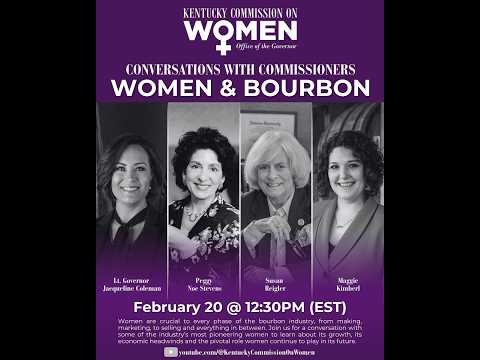
At a virtual "Conversations with Commissioners" event hosted by the Kentucky Commission on Women, Lieutenant Governor Jacqueline Coleman convened a three-woman panel that traced women’s long involvement in the bourbon industry and spotlighted recent efforts to build careers and leadership for women.
Peggy Noe Stevens, a master bourbon taster and founder of the Bourbon Women Association, described founding the group after focus groups showed women were an underengaged consumer base. "We needed to start a conversation," Stevens said, recounting the Association’s growth from a 75-person inaugural event at the Governor’s Mansion to a national organization present in 16 cities, running more than 500 events and offering a foundation that has awarded more than 60 scholarships to women entering the industry.
The Bourbon Women Association’s SIPposium—an annual women-only event—brings hundreds of participants together for behind-the-scenes workshops and distillery excursions, Stevens said, and the Association provides mentorship and training that leaders credited with helping women launch brands and take senior roles.
Maggie Kimbrell, content editor of American Whiskey Magazine, said women now hold production and blending roles that once were rare: "We’re seeing female master distillers and master blenders in increasing numbers," Kimbrell said, noting names and examples discussed at the event. She and other panelists cited scholarship and training programs as a key pipeline that prepares women for technical and managerial jobs.
Susan Riegler, a longtime bourbon writer and academic instructor, highlighted education programs across Kentucky—courses at Eastern Kentucky University, the Jim Beam Institute at the University of Kentucky and other university tracks that train people for distillery, hospitality and tourism work. "Universities in the Commonwealth have stepped up to help educate the workforce," Riegler said.
Panelists acknowledged gaps remain. Peggy Noe Stevens and Maggie Kimbrell said women are less common in distributor leadership and some C-suite ownership roles, and the panel urged continued focus on ownership, capital access and distributor-level opportunities.
Commissioners in the live event cited concrete examples of women-owned suppliers and agricultural partners—Brooks Grain and a group called Whiskey Sisters—and panelists said women are active across the supply chain, from grain brokerage to maturation and maturation teams.
The panelists framed the change as both cultural and structural: more women are visible in tasting rooms, tours and visitor experiences while targeted scholarships, mentoring and university programs are creating more paths into production and leadership.
The Commission closed the program with a thank-you and an invitation to follow upcoming events.