Get Full Government Meeting Transcripts, Videos, & Alerts Forever!
Get email alerts on the Public Health Law topic
No spam. Unsubscribe anytime.
North Carolina panel outlines post-COVID limits on emergency powers, quarantine rules and a ban on most COVID-19 vaccine mandates
Summary
State public-health lawyers and a UNC School of Government expert told conference attendees that 2021 law changes (effective 2023) impose time limits on statewide emergency declarations, clarify when the state may issue class-or-category isolation orders, narrow imminent-hazard authority, and that a separate recent law (effective 01/01/2024) bars most COVID-19 vaccine mandates by state and local governments.
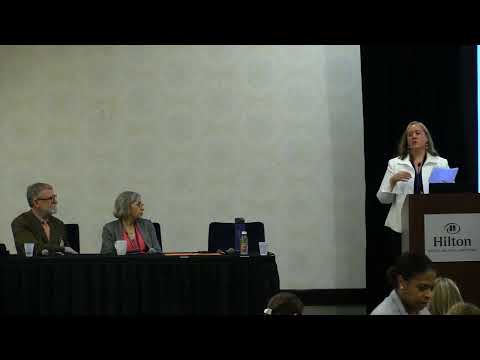
Virginia Niehaus, director of regulatory and legal affairs for the Division of Public Health, Jill Moore of the UNC School of Government and John Barclay, special deputy attorney general in the North Carolina Department of Justice, told a conference audience that the COVID-19 pandemic prompted targeted changes to state law and practice for communicable-disease control.
At the session, Virginia Niehaus summarized the legal foundations for communicable-disease work in North Carolina, citing general statute chapter 130A and administrative rules adopted by the Commission for Public Health as the primary sources that define reportable diseases, reporting timeframes and control measures. "Every state has a law that requires the reporting of certain communicable diseases to public health," she said, and pointed attendees to the statutory and rule citations used in daily practice.
Panelists said changes enacted by the General Assembly in 2021 and effective Jan. 1, 2023, place new time limits and procedural checks on emergency and imminent-hazard powers used during the pandemic. "As of this past January 1, the governor can't do that anymore," said Jill Moore, describing the new 30-calendar-day limit on statewide emergency declarations; extensions beyond that window now require concurrence by a majority of the council of state and are capped at 60 days unless the legislature acts. Moore added that the statute defines a statewide emergency as one that affects two-thirds or more of the state's counties.
Moore also described amendments to isolation-and-quarantine law that clarify the state health director's authority to issue "class or category" orders to groups of people for up to seven days, with distinct procedures to extend those orders for larger-scale or statewide actions. "The state health director may order isolation or quarantine for a class or category of persons for up to seven calendar days," she said, noting that most quarantine orders historically have been individualized.
The panel discussed changes to imminent-hazard authority as well: recent language emphasizes that local health directors may order abatement of an imminent hazard on a specific, identified property and that statewide determinations of class-or-category property hazards are now subject to similar time-limited processes and higher-level review.
John Barclay focused on enforcement practice and courtroom mechanics, advising local health directors to prepare in advance with county attorneys and district attorneys. "The most effective enforcement tools are not the lawyers going to court," Barclay said. "It is communication and education." He outlined the civil process used when a county seeks abatement or an injunction: file a complaint, seek a temporary restraining order, follow with a preliminary injunction hearing and, if necessary, a final case on the merits.
Barclay cited several pandemic-era enforcement examples and an upcoming appellate moment: an abatement case involving a racetrack (referred to in remarks as the Speedway/Kinsley matter) is scheduled for oral argument before the North Carolina Supreme Court on Nov. 7. He said many earlier actions succeeded because public-health officials combined legal readiness with clear communication to secure voluntary compliance before contested hearings.
The panel also addressed confidentiality and disclosure limits. Niehaus noted that individually identifiable communicable-disease information is confidential and "not a public record," while also outlining statutory exceptions that permit limited disclosures — for example, to law enforcement in narrow circumstances to prevent serious imminent threats, or to a workplace or school official when necessary to prevent transmission within that facility, accompanied by directions to keep the information confidential.
Audience members pressed on practical concerns. One asked about employment fallout for people subject to isolation orders; panelists pointed to ADA and other federal protections and to the Office for Civil Rights as enforcement avenues. On county-attorney relationships, Moore and Barclay recommended early engagement and education so lawyers understand public-health law and the risks of action versus inaction.
The panelists emphasized that the post-COVID statutory changes are important but not sweeping: many of the basic tools (isolation, quarantine, abatement, misdemeanor enforcement and civil injunctions) remain available. They urged attendees to keep up training, prepare templates with legal counsel, and use persuasion and clear public communication whenever possible. The session closed with an invitation to breakout workshops on operational issues.
The conference moved to a break and then into breakout sessions where attendees could pursue hands-on guidance and legal templates referenced by the panel.