Get Full Government Meeting Transcripts, Videos, & Alerts Forever!
Get email alerts on the Fatherhood topic
No spam. Unsubscribe anytime.
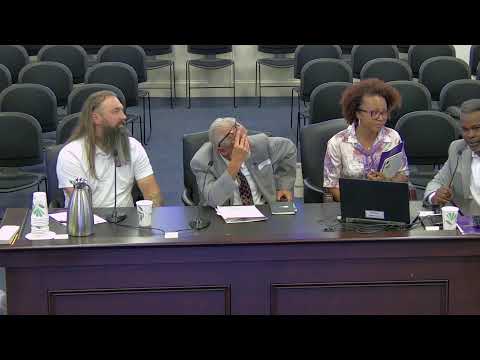
Commission on Race and Access to Opportunity hears fatherhood initiative presentations, asks for draft legislation
Summary
Presenters from national and state fatherhood organizations told commissioners that father‑engagement programs, training and small grants can help reunify families and reduce downstream costs; members pressed presenters to show how proposals address racial disparities, incarceration and reentry needs and asked for concrete draft bill language.
Madam Chair convened the Commission on Race and Access to Opportunity for a policy briefing on fatherhood initiatives that included two outside presenters and multiple commissioners asking for legislative suggestions.
Mark Ludwig, executive director of the National Council for Equal Shared Parenting, opened the session by describing national momentum behind 50/50 rebuttable‑presumption bills and by arguing that greater father engagement can prevent many social problems. Ludwig cited several states where similar legislation has passed and offered a series of policy proposals and program ideas: fatherhood classes, employment assistance, co‑parenting education, mentorships and partnerships with local organizations. He framed the approach as partner‑centred and low‑cost and urged investment now to avoid larger public expenditures later. "You can't deny those statistics," Ludwig said, adding, "85 percent of youth in prison grew up without a dad," and presenting a back‑of‑envelope calculation using a cited state prison cost of $42,488 per inmate to make an economic case for prevention.
The committee’s members tested Ludwig’s framing. Senator Berg acknowledged the importance of father engagement but said the commission must also address structural drivers such as incarceration, sentencing disparities and poverty. Berg cited racial disparities in incarceration and gun‑violence outcomes and warned that praising fatherhood without confronting systemic barriers would be incomplete. Representative Kulkarni pressed whether Ludwig’s trainings and materials address root causes—housing, transportation, jobs and sentencing policy—or primarily promote legislative models; Ludwig said his organization also works on reintegration, legal resources and workforce supports and offered to provide more detailed solutions in follow‑up materials.
The commission then heard David Cozart and colleagues from the Commonwealth Center for Fathers and Families (CCFF). Cozart described CCFF’s collaborative, co‑design approach and highlighted programs such as the KY Data Academy, which provides a multi‑week training for fathers, and a mini‑grant program that awards two tiers of grants ($5,000 and $10,000) to local faith‑based and human‑services partners. Cozart invited members to an October presummit slated for Oct. 14 and offered the organization’s curriculum, research and technical assistance. "We need to start doing that work together," Cozart said, emphasizing local partnerships and implementation across service systems.
Joel Griffith, a CCFF board member and former child‑welfare professional, told commissioners that research finds father engagement—when safe and appropriate—correlates with higher family reunification rates, shorter foster‑care stays and better child well‑being. Tyler Barrett, an Eastern Kentucky regional engagement agent, gave personal testimony about reentry and recovery, describing how training and local CCFF mini‑grants helped people leaving custody gain work certificates and reconnect with children.
Members noted existing legislative steps: Chairman Jackson referenced the recent passage of House Bill 185, which includes funding to establish a KCTCS‑based vocational program on a state penitentiary site to provide certificates to people within two years of release. Commissioners agreed the bill is a step toward reentry supports but emphasized that program design and local implementation are critical.
Action items and next steps: Chairman Jackson asked presenters to submit a short set of concrete legislative suggestions and program recommendations the commission could use to draft bills. Several members said the commission would compile recommendations from the six‑session series and consider producing draft legislation to be vetted with other committees. The commission set a next meeting date of Aug. 19.
The hearing balanced policy arguments about upstream prevention and cost savings with repeated member concerns about addressing structural inequities, incarceration patterns and local implementation. Presenters agreed to provide follow‑up materials and draft suggestions on programs, training curricula and small‑grant models.