Get Full Government Meeting Transcripts, Videos, & Alerts Forever!
Get email alerts on the Budget Deficit topic
No spam. Unsubscribe anytime.
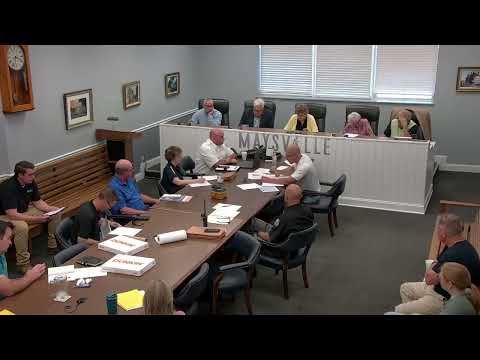
Budget workshop trims deficit projection, debates nonprofit funding and vehicle purchases
Summary
At a June 6 budget workshop the city manager reported trimming a projected deficit to about $10.5 million, commissioners debated donations to nonprofits and a new applicant that provided no dollar request, Rotary fundraising for AEDs, and fire/EMS vehicle procurement options including cheaper demo ambulances vs. long lead times for new units.
The Maysville Board of Commissioners used a June 6 budget workshop to review nonprofit and donation requests, discuss public-safety equipment fundraising, and examine capital and utility projects that together affect a projected general-fund shortfall.
City management told commissioners the tentative deficit had been reduced from roughly $12.3 million to about $10.5 million after line-item adjustments, but noted that $1 million for a fire engine has been delayed to fiscal 2027 and that several large utility projects — including a Maize Lake water-line redundancy and a sewer capacity project — remain on the books. The manager warned that borrowing for capital projects would likely require raising water rates to repay loans.
On donation requests, staff recommended maintaining most annual amounts for organizations such as the Buffalo Trace Children’s Advocacy Center, the Youth Center, the Miracle League and others. A new funding letter from Comprehend, a behavioral-health provider, included no requested dollar amount; commissioners debated whether to reallocate existing funds (for example, reducing a firefighters association line item) to cover a new award rather than expand the budget.
Commissioners also discussed a Rotary fundraiser aimed at placing AEDs in patrol and sheriff vehicles. Staff said AED units cost about $1,500 each and roughly $1,800 with batteries and pads; Rotary’s stated goal was $55,000 to buy 30 units. A staff recommendation was made to consider a $1,800 contribution to cover one unit or reallocate $1,000 from VFW funds.
Fire and EMS leadership briefed the board on vehicle procurement timelines and costs. The fire chief said demo ambulances are available this year and can save roughly $100,000 compared with a new ambulance that could take about 24–31 months to arrive; staff cited a demo-listing price near $304,358 versus about $404,500 for a new unit and recommended ordering or reserving to lock current pricing. On EMS finances, the chief said reimbursement rates are poor, noting that some Medicaid transfers can pay as little as about $133, and characterized the operating model as difficult: "EMS is the worst business model ever."
Manager and staff presented a proposed pay scale that includes a flat 4% pay increase in the budget worksheet and noted a slight reduction in retirement contribution rates, which somewhat eases personnel-cost pressure. The manager asked commissioners to review departmental packet materials ahead of a regular meeting later in the week to finalize budget choices and schedule readings.
The commission then moved into a closed session under KRS 61.810(1)(f) to discuss an appointment that might arise from the meeting; the body returned to open session and adjourned.