Get Full Government Meeting Transcripts, Videos, & Alerts Forever!
Get email alerts on the Fire Station 2 topic
No spam. Unsubscribe anytime.
Commission advances planning to replace Fire Station 2 after PFAS findings; $959,000 grant covers demolition and cleanup only
Summary
After EGLE-identified PFAS contamination at Station 2, staff told the commission a $959,000 grant will pay demolition and remediation but not a new station; staff estimates a replacement at the Water Street DPW site could cost about $9.1 million and the commission voted to continue planning and pursue cleanup work.
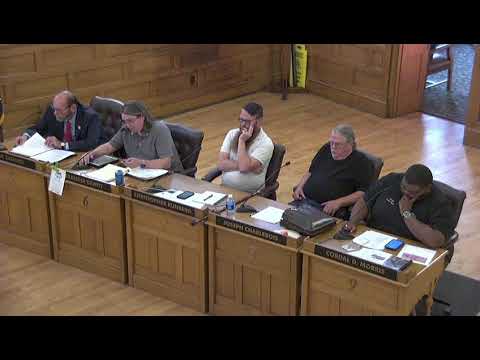
The Bay City City Commission on July 20 voted to advance planning for a replacement of Fire Station 2 after city staff reported on PFAS contamination at the existing station and described a federal grant that will fund demolition and remediation but not construction of a new facility.
A presenter for the public-safety infrastructure committee told the commission the station, built in 1956, averages about 2,000 calls per year and currently provides average priority response times of about 3 minutes, 31 seconds within its district. The site has PFAS contamination in soil and in nearby storm and sanitary sewer lines identified through EGLE testing. “We secured a $959,000 grant from Senator Peters’ office that takes care of all of the demolition and cleanup on the site, as well as the adjacent storm sewers, sanitary sewers in that area,” the presenter said, adding that the grant does not fund a replacement station.
Staff presented a preferred replacement location at the former DPW property on Water Street and gave a planning estimate of roughly $9.1 million for a new station (staff emphasized these are estimates and not final bids). The presenter said a $10 million bond would carry an approximate annual debt payment in the $700,000–$800,000 range on a 20-year term; staff noted that roughly one mill of property tax revenue could cover the annual debt payment in a planning scenario.
What the grant covers and what it does not: Staff and the city’s community development director explained the $959,000 grant pays for demolition and cleanup to bring site levels down to EGLE-acceptable criteria, but does not pay for building a replacement station. Shelley, the community development director, told commissioners the adjacent school and right-of-way were tested and showed PFAS at much lower levels and that EGLE had not required fencing because contamination was below the surface. “There is not a surface contamination issue,” Shelley said, adding that remediation approaches depend on PFAS chain lengths and end use; options include excavation, disposal and engineered filtration walls.
Commissioner concerns and public comment: Commissioners repeatedly asked whether a remediated site could carry deed restrictions preventing future use as a fire station; staff said that would be an after-cleanup determination by EGLE. Several commissioners urged transparency on costs and the need to let voters decide tax questions. Commissioner Charlebois questioned why cost estimates have grown, saying “we went from a $5,000,000 estimate to $10,000,000.” Residents who spoke during public comment described personal safety concerns and thanked firefighters for rapid response to recent fires; some urged that Station 5 and other urgent needs also be addressed.
Vote and next steps: The commission approved a resolution to continue evaluating and developing the Station 2 replacement project, to pursue demolition/remediation work covered by the grant and to return with additional details and options for funding and siting. Commissioners emphasized the need for follow-up paperwork from EGLE and for clearer cost and reuse analyses before any final construction or ballot measures.
The commission’s action advances planning and cleanup but does not authorize construction spending; it does not itself set a tax rate or bond amount. Further decisions — including whether to place funding before voters — will require additional staff analysis and subsequent commission votes.