Get Full Government Meeting Transcripts, Videos, & Alerts Forever!
Get email alerts on the Operational Referendum topic
No spam. Unsubscribe anytime.
Tomorrow River board directs $1.1 million, three‑year operational referendum after turnout briefing
Summary
After a Nexus Solutions briefing on local turnout, the Tomorrow River School District board directed staff to draft an operational referendum asking for $1,100,000 over three years. Board members cited projected budget deficits, enrollment uncertainty and state funding volatility in approving the amount by voice vote.
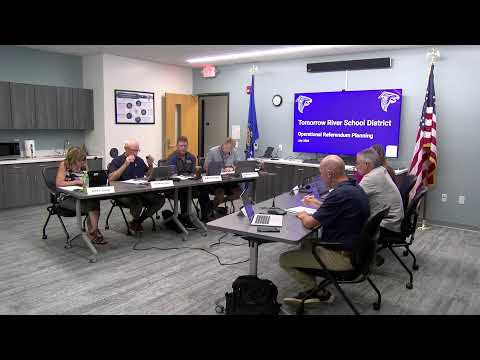
The Tomorrow River School District board voted on July 20 to direct staff to prepare ballot language for a three‑year operational referendum of $1,100,000, the board said after a data briefing from a referendum specialist.
Ingrid Knudson of Nexus Solutions told the board she pulled public voter files and found about 3,600 registered voters in the district and unusually high turnout in recent elections: 3,372 voters participated in the 2024 presidential election, or roughly 93.7 percent of registered voters, and turnout in the 2022 gubernatorial election among the same registrants was about 75 percent. "Because you have such a high voter participation rate, you really want to try to get out to all the different communities," Knudson said, offering an 85 percent turnout estimate for a gubernatorial‑year referendum.
The recommendation and turnout modeling framed a lengthy budget presentation by district administration. Administrator Ryan reviewed Baird Financial forecasts that used a $900,000 baseline (the district's current referendum level) and showed multiple scenarios through the next budget cycles. He told the board the district is projecting a modest deficit without additional revenue and emphasized competing priorities and rising costs. "We need this money to maintain what we're doing right now and keep the doors open and operate," Ryan said.
Board members debated term length and levy effects. Trustees examined modeled mill‑rate impacts across scenarios from $900,000 to $1.2 million and discussed how open‑enrollment projections, state aid and per‑pupil adjustments could change the district's position. Several members said they preferred a more incremental increase rather than a larger single jump and expressed concern about asking taxpayers for a large increase while many families remain affected by a recent building project.
After discussion, a board member moved, and a second was received, to set the referendum request at $1,100,000 for three years. The chair called for the question and the motion was approved by voice vote; the board directed administration to work with legal counsel (Quarles & Brady) to draft official ballot language to return for formal approval at the board's August meeting.
Votes at a glance: consent agenda (approved by voice), milk bid (approved by voice), meal price changes (approved by voice), teacher contract for Megan Garski (approved by voice), donations accepted from Jerome Gallant ($10,000) and the Helbach/Shofer families ($21,660) (approved by voice). The board later moved into closed session under state statutes 19.85(1)(c),(e),(f); the roll call recorded five 'Aye' votes for that motion (Kreishek, Sercinski, Mulroney, Logan and Elbach).