Get Full Government Meeting Transcripts, Videos, & Alerts Forever!
Get email alerts on the Property Taxes topic
No spam. Unsubscribe anytime.
Douglasville City holds first public hearing on proposed 2026 millage rate; CFO explains M&O and falling bond millage
Summary
City CFO Karen Cowan told a special Douglasville City Council public hearing that the city proposes to keep the 2026 maintenance and operations millage rate at 8.749 while bond millage falls, reducing the city portion of the total tax rate; one resident asked about an 11% rise in residential valuation.
Douglasville City held its first of three public hearings on the proposed 2026 ad valorem tax millage rate during a special city council meeting, where Chief Financial Officer and Assistant City Manager Karen Cowan explained why the city is proposing to keep the maintenance and operations (M&O) rate unchanged while the bond millage is dropping.
“Karen Cowan, the city's chief financial officer and assistant city manager, said the M&O rate is for to collect revenue to pay for maintenance and operations, which are fuel cost and utilities, salaries, things of that nature,” Cowan said, explaining the distinction between the M&O rate and the bond millage, which is restricted to debt service.
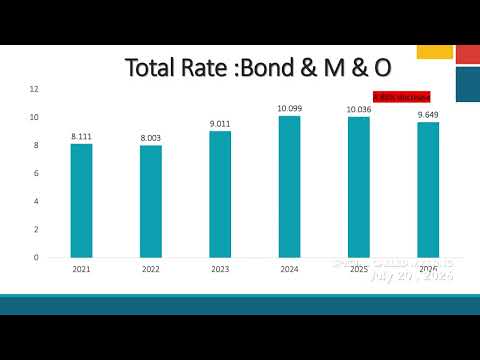
Cowan told the council the proposed 2026 M&O rate is 8.749 with no increase, but state advertising rules can require a notice of a tax increase when property assessments rise even if the millage rate itself is unchanged. She said the bond millage is decreasing roughly 30%, from 1.287 to 0.9, which reduces the city’s combined rate from about 10.036 to 9.649 — a decrease Cowan characterized as approximately 4.86% for the city portion.
Using a homeowner example, Cowan said that for an assessed value of $350,000 held constant year-over-year, the lower bond millage would reduce annual taxes by about $54 compared with the prior year. She also reported that the city’s digest showed new growth representing about 13% of revenue and reassessed property about 7%, and that the total residential valuation in the digest rose roughly 11%.
A resident, Anita Vincent of Golf Ridge Boulevard, asked why residential appraisals rose 11%. “I’m just curious of why the, residential, appraisals went up 11%,” Vincent said. Cowan reviewed the chart and confirmed that the residential total valuation had increased by about 11% and said that could reflect new growth or reassessment; she offered to follow up individually by email for property-specific questions.
Cowan said keeping the M&O rate steady helps provide tax stability amid upward pressure from inflation, fuel and utility costs and rising health insurance and also positions the city to adapt to possible legislative changes being discussed that would cap residential assessment growth tied to CPI.
Finance Committee Chairman Christopher Watts presided over the hearing, invited public comment and urged residents with later questions to attend the evening hearing or the last scheduled hearing on August 3. No formal votes on the millage were taken at the meeting; Watts moved to adjourn the public hearing, and the chair subsequently adjourned the meeting.
The council scheduled two more public hearings on the millage rate: an evening session the same day at 6:00 p.m. and a final hearing on August 3 at 5:00 p.m.