Get Full Government Meeting Transcripts, Videos, & Alerts Forever!
Get email alerts on the Workforce Development topic
No spam. Unsubscribe anytime.
GDDC presents 2025 skills‑gap analysis to Dubuque City Council, urges a population‑growth strategy
Summary
Greater Dubuque Development Corporation told the Dubuque City Council that employment is projected to grow while the working‑age population contracts, producing multi‑industry skills gaps; GDDC recommended layered strategies—K–12 career exposure, scaled certificate programs, college retention and targeted talent attraction—to address workforce shortages.
Greater Dubuque Development Corporation presented its 2025 skills‑gap analysis to the Dubuque City Council in a July 20 special session, warning that job growth is outpacing local population and that the region must adopt a deliberate population‑growth strategy to fill rising labor needs.
“We're gonna present some information on the 2025 skills gap analysis,” said Jason White, president and CEO of the Greater Dubuque Development Corporation, as he introduced the briefing.
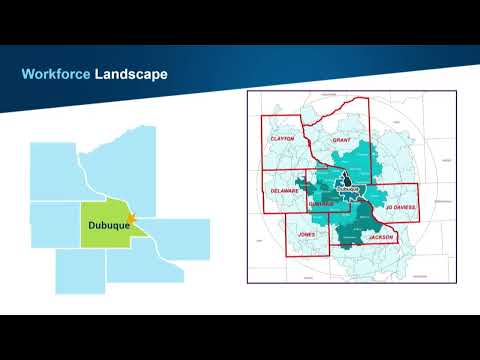
Nick Hockenberry, GDDC director of regional development, told the council the analysis compares occupational demand with postsecondary completions using Bureau of Labor Statistics and Census data across a seven‑county labor region that includes Dubuque County and six surrounding counties in Iowa, Illinois and Wisconsin. Hockenberry said employment across the region is projected to grow roughly 3.8% over the next decade while the working‑age population is projected to decline about 3.7%, creating a supply‑demand squeeze for employers.
Hockenberry flagged specific industry and occupational signals: healthcare and social assistance leads with roughly 15,600 jobs and about 5% projected growth; manufacturing has about 14,000 jobs and is growing at nearly 7%; transportation and warehousing shows about 8,000 jobs with growth near 6.7%. He said some occupations—stockers and order fillers, laborers and freight movers, truck drivers, office clerks, assemblers and cooks—sit at the “first rungs” of careers that regional certificate programs are designed to supply.
The presenter noted several year‑to‑year changes in the top 20 occupations: postsecondary teachers dropped off the list, electricians newly appeared at No. 20, and welders climbed six positions to No. 14. He also said the childcare worker gap nearly doubled and moved into the top 10, underscoring how limited childcare can constrain parents’ ability to work.
Hockenberry described Opportunity Dubuque, a program run by Dubuque Works partners and Northeast Iowa Community College that offers tuition‑free certificates and coaching connected to employers. “It's not just a walk in the park where, hey, you get a, you know, class a, and then you just get a job,” said Joseph Lewis, a program participant featured in a testimonial video; Lewis said the program helped him secure work at Prairie Farms and be home with his children each day.
Hockenberry summarized four findings to guide strategy: (1) high‑school talent pools remain foundational; (2) gaps touch every major industry; (3) colleges attract students but do not always retain them in the region; and (4) the region cannot grow its way out of a declining working‑age population without intentional in‑migration. He proposed layered responses focused on K–12 career introduction, scaling Opportunity Dubuque, college engagement and retention, welcoming newcomers, reducing transportation barriers and a focused talent‑attraction effort.
When Council member Miss Weldon asked about artificial intelligence, Hockenberry said AI has not yet shown a clear impact in local data but could eliminate early entry tasks—such as prospecting work in sales—thereby eroding on‑ramps to careers. “If you eliminate that entry point … where are you going to get those experienced sales professionals in our market?” he said.
Mayor Kavanaugh thanked GDDC for the briefing. The council did not take action on policy during the work session; the body adjourned and reconvened a short time later for its regular meeting.
Note on sources and data: the figures and quotes in this article come from the GDDC presentation and the council work session on July 20, 2026. For city contact information mentioned during the meeting, the correct city web page is www.cityofdubuque.org/councilcontacts (the transcript contained a typographic variant).