Get Full Government Meeting Transcripts, Videos, & Alerts Forever!
Get email alerts on the Property Tax Reform topic
No spam. Unsubscribe anytime.
Council studies 13% cut scenario if property-tax referendum passes; staff warns of service reductions
Summary
Staff modeled a 13% operating reduction under proposed property-tax reform and presented a $755,000 remaining gap after aggressive cuts; council discussed reserve guardrails, possible new impact fees, and the millage needed to maintain current service levels (approx. 7.1).
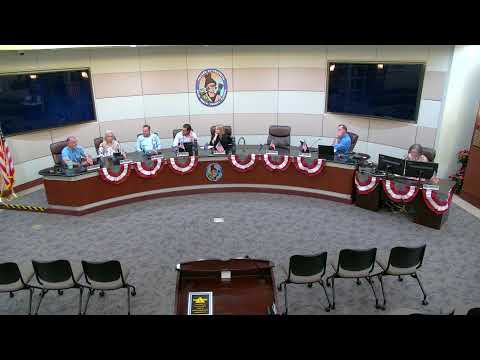
Village manager (role title used in the meeting) presented an exercise showing how proposed state-level property-tax changes could affect the Village of Tequesta and its operating budget.
The manager said state changes would require a 10% reduction in one year and a 3% reduction in another in the exercise he prepared; for Tequesta that resulted in staff targeting $1.97 million in discretionary reductions but still leaving a gap of roughly $755,000 under a 13% scenario. "We only had $1,970,000 in discretionary funds... we still $755,000 gap," the manager said, describing cuts that would defer maintenance, reduce community programs and eliminate training and discretionary advocacy funds.
Council members pressed staff on options. Several members said the modeling showed staff had already been conservative and that the most painful cuts would come from deferred infrastructure, reductions to leisure services and potential reductions to staffing if forced. One council member asked how much the millage would need to rise to keep services whole; staff and the appraisal-district analysis presented at a previous meeting showed a millage around 7.1 would be needed to maintain current services without deeper cuts.
The manager recommended continuing monitoring of legal challenges and educating residents about what the reform means for village services, and said staff would research options for reserve policies and provide additional data on other taxing authorities (library, county fire, inlet district, water management district) that show up on resident tax bills. "If you scrapped basically everything... we're still $755,000 gap," the manager warned, emphasizing the exercise was illustrative and not staff recommendation.
Council discussion also raised the idea of imposing additional nonad valorem fees (impact fees) to shift costs to new development; staff said an impact-fee study would be needed if council directed staff to pursue changes, and quoted a study cost in the $20,000–$30,000 range. Several members asked that staff bring back comparisons and a holistic view of fees (mobility fee, fire/police impact fees) before moving forward.
Next steps: staff will return with legal citations, updated impact-fee study quotes if requested, and options for formal reserve-policy guardrails for council consideration before budget adoption.