Get Full Government Meeting Transcripts, Videos, & Alerts Forever!
Get email alerts on the Street Maintenance Funding topic
No spam. Unsubscribe anytime.
Molalla staff proposes eight‑ to‑12‑month outreach before asking voters to fund road repairs
Summary
City staff presented pavement condition scenarios and recommended a substantial public engagement program before pursuing a local gas tax or street utility fee, noting current spending keeps the city "treading water" and that funding choices will determine whether the pavement condition index rises or falls over five years.
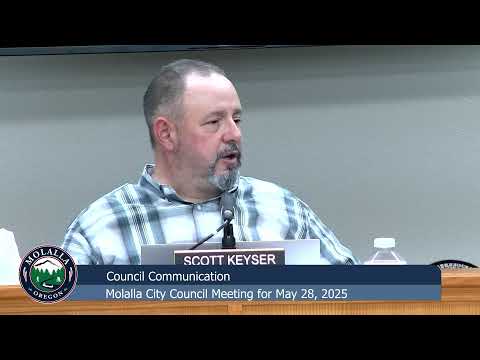
City staff told the Molalla City Council on Wednesday that current street‑surfacing investment will not raise the city’s pavement condition index (PCI) and recommended a broad public engagement campaign before bringing voter measures to the ballot.
Assistant City Manager Matt Cortell said staff modeled five‑year budgets ranging from an unconstrained $16.9 million plan (which would push PCI into the mid‑80s) down to the current trajectory of roughly $300,000 a year, which would produce a roughly four‑point drop in systemwide PCI over five years. "At the $300,000 spending level, City's PCI is projected to fall by 4 points over the next 5 years," Cortell said.
Why it matters: the council must decide whether to pursue revenue options that would require voter approval — a street utility fee or a local fuel tax — or rely on limited capital resources such as system development charges (SDCs) and fund‑exchange dollars that are legally restricted to capital projects.
Cortell said SDCs and fund exchange dollars remain the only dedicated capital resources and emphasized the legal limits on how some funds may be used. He warned that gasoline tax receipts have flattened because of growing electric vehicle use and that most grants are irregular and not a reliable long‑term source.
Staff recommended a pre‑engagement phase followed by a community education and feedback program that would include a dedicated project web page, surveys, tabling at local events (such as Celebrate Molalla), town halls and meetings with community groups. Cortell said the process could take "somewhere from 8 to 12 months," but could be shortened with reduced engagement.
Councilors debated modes and timing. One councilor argued for a local gas tax to capture out‑of‑town use of roads: "I think the gas tax is the best option, for 2 reasons ... they're using our roads," the councilor said. Other members favored a mix of small amounts on both gas and utility bills to spread the burden and preserve fairness for lower‑income and fixed‑income residents. Several councilors urged clear, simple, repeated messaging and an annual reporting mechanism so voters could see exactly what any new money paid for.
Next steps: staff will return with comparative numbers from surrounding cities, draft public‑facing materials and a timeline; council tentatively scheduled a follow‑up work session for June 25 to begin reviewing outreach products. Cortell said the staff‑recommended approach is intended to provide both information and an opportunity for the community to shape any measure before council action.