Get Full Government Meeting Transcripts, Videos, & Alerts Forever!
Get email alerts on the Battery Energy Storage topic
No spam. Unsubscribe anytime.
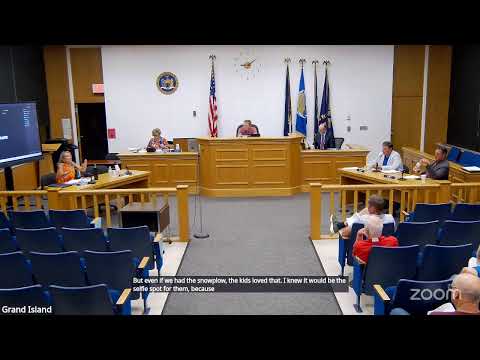
Grand Island board tables proposed battery storage law after residents and advisors raise concerns
Summary
After public commenters and advisory‑board members flagged notice, noise, environmental and definition issues, the Grand Island Town Board voted to table a proposed battery energy storage law so staff can revise terminology on noise limits, fencing and tier definitions.
The Grand Island Town Board voted to table a proposed local law regulating battery energy storage systems after several residents and advisory‑board members urged more time for review and clearer technical language.
During a public hearing, a presenter who identified themselves as representing developers argued the draft’s 40‑decibel standard was inconsistent with other regulations and recommended a 55‑decibel limit; the speaker also asked the town to clarify that pad‑mounted interconnection equipment cannot be required to sit inside fenced enclosures because National Grid requires access. "Mechanical equipment could be construed to mean pad mounted interconnection equipment, which cannot be within a fence line," the presenter said.
Why it matters: board members and commenters said the draft’s purpose and technical definitions affect where and how battery projects could be sited, whether projects need additional utility poles and whether first responders and environmental resources are adequately protected. Kristen Gassio, a resident and advisory‑board member, urged the town not to rush adoption, noting the July 15 draft had been available to the public for less than a week. "This law is too important to pass it, as is," she said, recommending the town add clearer tier definitions and explicit references to protecting agricultural land, forests and wildlife.
Board action and what’s next: after the hearing the Chair moved to table the measure for further revision; the motion was seconded and carried by roll call. The board directed staff and counsel to return a revised draft addressing the items raised — including clearer tier definitions, explicit references to the town’s comprehensive plan, and clarifications about fenced equipment and noise standards — before further consideration.
The meeting record shows the board did not adopt the law at this meeting; the tabling preserves options for revisions and additional public review.
Reporting notes: quotes and attributions in this story are taken from public‑hearing remarks recorded in the meeting transcript. The person who spoke at the start of the hearing identified themselves as representing developers but did not give a personal name; this article uses the meeting transcript’s functional speaker label for that speaker.