Get Full Government Meeting Transcripts, Videos, & Alerts Forever!
Get email alerts on the Energy Storage Moratorium topic
No spam. Unsubscribe anytime.
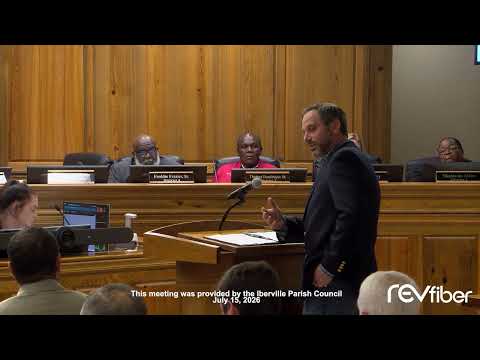
Iberville Parish Council adopts two‑year moratorium on utility‑scale battery storage after debate
Summary
After public comment from fire‑safety experts and industry representatives, the Iberville Parish Council voted to adopt a two‑year moratorium on locating and constructing utility‑scale battery energy storage system facilities in unincorporated parts of the parish; a lawyer's edits to exempt residential battery backups were rejected in a failed substitute motion.
The Iberville Parish Council voted July 15 to impose a two‑year moratorium on the siting and construction of utility‑scale battery energy storage system (BESS) facilities in unincorporated areas of the parish, the council announced after a roll‑call vote.
The moratorium, as adopted, pauses approval of large battery storage facilities while the parish seeks expert studies on fire risk, environmental impacts and appropriate land‑use siting. The council considered, but rejected, a substitute motion that would have clarified the ordinance to exempt behind‑the‑meter residential battery systems and to narrow the language; that substitute failed on a roll call before the council approved the original moratorium.
The vote followed roughly an hour of public comment that included technical testimony and industry appeals. John Walser, who identified himself as working for Fire and Risk Alliance and as a retired assistant fire chief, told the council that modern codes, standards and battery management systems have reduced the incidence and consequences of BESS failures and stressed the importance of training first responders. “Battery energy storage systems are very different from consumer electronics…they are highly regulated and are part of the electrical infrastructure,” Walser said, urging a precautionary pause but noting regulatory tools to manage risk.
Representatives of energy developers urged a shorter pause. Jared Del Rose, speaking for Aprilville Energy Storage, said his company had redesigned its project to minimize footprint (about 30 acres for a proposed 175‑megawatt facility) and asked the council to adopt a 90‑day pause rather than a two‑year moratorium to preserve investor certainty and allow time for ordinance drafting and first‑responder training.
Council members and a legal advisor debated wording and scope: advisers recommended distinguishing household battery backup systems from utility‑scale facilities and separating technical risk studies (fire, environmental) from land‑use mapping. Council members chose to adopt the original moratorium language as presented rather than the edited substitute.
The council directed staff to pursue expert studies and to inform the public about forthcoming meetings and any technical briefings. The ordinance, as read into the record, will remain in effect for the stated moratorium period while the parish completes the directed reviews.
What happens next: the council and parish staff said they expect to convene expert briefings and public meetings to inform any future ordinance that would govern siting, setbacks and safety requirements for large battery storage projects. The ordinance sets a temporary pause on approvals for large facilities; it does not in the adopted text exempt residential battery backups.
Provenance: discussion, public comment and votes on the moratorium appear throughout the meeting transcript beginning when the president raised the moratorium (agenda remarks and project updates) and continuing through the attorney's framing, public testimony and the subsequent motions and roll calls.