Get Full Government Meeting Transcripts, Videos, & Alerts Forever!
Get email alerts on the Kratom Policy topic
No spam. Unsubscribe anytime.
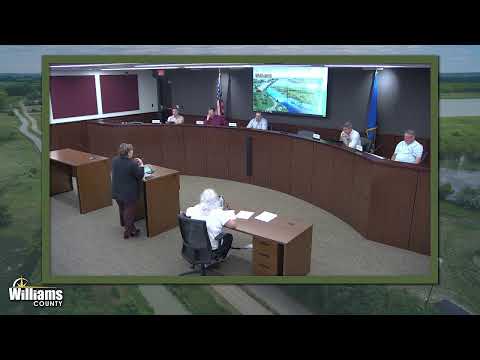
Residents urge Williams County to seek kratom ban; commissioners refer issue to study committee
Summary
After emotional testimony from parents and a recovering user about kratom-related harms, commissioners agreed to form a county committee to study enforcement options, treatment resources and coordination with cities and state agencies.
Carla Kucher told the Williams County Board of Commissioners she wanted a full ban on kratom after describing her 22‑year‑old son's liver and heart damage that she links to kratom use. “Kratom is the only thing we can link this back to,” Kucher said, asking the board to pursue a prohibition that could include ‘‘pure kratom.’”
Kucher and other public commenters, including recovering user Brandon Runyon and Charlotte Moore, urged the board to act to protect children and families. Runyon described severe dependence and withdrawals and said treatment at a clinic was necessary to recover: “The withdrawals are horrendous… It destroyed my life for several years.” Moore urged the board to weigh testimony from North Dakotans and to require disclosure of outside advocacy funding that influenced past state legislative testimony.
County staff and law enforcement told commissioners that enforcement would be complicated. A staff member advising the board said proving a violation likely requires laboratory testing to identify banned synthetic compounds and that state crime‑lab turnaround can take months. The sheriff's office noted private testing would be expensive and that testing is typically needed before prosecution.
Commissioners emphasized they did not want to criminalize people who use kratom. One commissioner said the county should focus on restricting retailers and supporting treatment options: “We don't want to create a situation where we ban it and criminalize the addict who's trying to get off it.”
The board voted to refer the matter to a multi‑stakeholder committee to study policy options, enforcement mechanisms, public‑education strategies and treatment access. The committee was proposed to include law enforcement, legal counsel, community members for and against a ban, and representatives from Williston and other towns. The motion to create the committee passed by roll call.
Next steps: staff and the appointed commissioners will convene the committee, compile legal options and return recommendations to the board for potential ordinance language or other actions.