Get Full Government Meeting Transcripts, Videos, & Alerts Forever!
Get email alerts on the Facility Policy topic
No spam. Unsubscribe anytime.
Narberth committee debates event rules, deposits and insurance for borough facility rentals
Summary
Committee members reviewed facility rental policy items including event end times, how to define a "party," cleaning deposits and whether nonprofit users should be required to provide certificates of insurance (currently required only for alcohol/special events). Staff warned unrestricted free use exposes the borough to liability and recommended clearer definitions and possible deposit/insurance requirements.
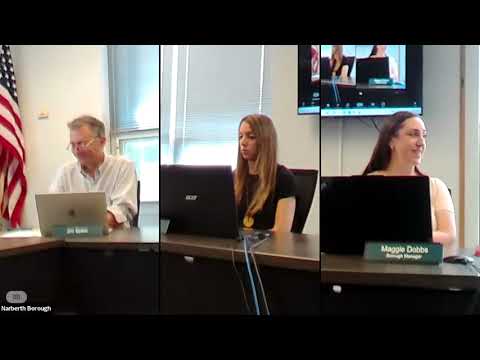
Narberth borough staff and committee members spent a large portion of the July 14 meeting refining policy choices for facility rentals, focusing on event timing, user categories, fee exemptions and liability protections.
Manager Meg Dobbs summarized the outstanding questions: how to define a "party" (staff proposed proxies such as number of tables or the presence of food), whether to limit weeknight events because of a recurring morning user that needs the room reset by 8 a.m., and how to handle fees for groups currently exempted as community or nonprofit users. "The vast majority of users ... don't pay anything," Dobbs said, adding that staff time, utilities and cleanup impose costs on the borough.
The committee discussed possible approaches: (1) enforce stricter end times (10 p.m. on school nights, 11 p.m. weekends), (2) impose a deposit or cleaning fee for events that involve substantial setup (for example, multiple tables) and (3) require certificates of insurance for one-off nonprofit users or retain COIs on file for recurring sponsors. Dobbs noted that the borough currently requires certificates of insurance for alcohol and special-event permits but not for general facility rentals, and that other municipalities commonly require COIs even for pavilion rentals.
Members debated whether to collect deposits from exempt users or to require insurance; some said post-event invoicing is administratively difficult, and others worried requiring insurance would burden smaller civic groups. Suggestions to define "party" by the number of tables or by setup/load rather than by the presence of food found some support.
No formal policy changes were adopted; staff was directed to refine definitions and options, consider deposit structures (for example a refundable deposit for cleaning), and return with clearer recommendations at a future meeting.