Get email alerts on the Instruction Student Performance topic
No spam. Unsubscribe anytime.
Amelia County board hears student-performance, CIP benchmark and professional-development updates
Summary
School leaders reported that student–teacher ratios meet state SOQ requirements, elementary reading gaps narrow by second grade, and middle- and high-school math show growth tied to targeted instructional strategies; presenters described professional development and new materials supporting teachers.
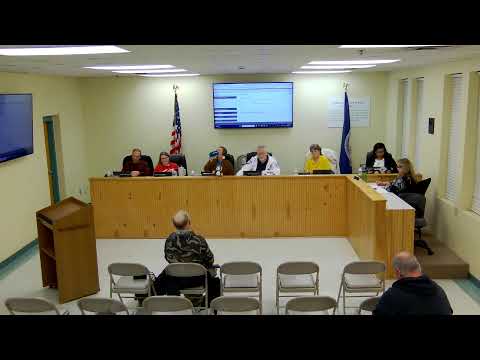
The Amelia County School Board on Tuesday received a series of presentations on student achievement, assessments and professional development that school leaders said are guiding instruction across the district.
Dr. Browning, the division’s instructional leader, told the board the annual student–teacher ratio report shows the division is within Standards of Quality (SOQ) requirements at each level and that class sizes vary by enrollment. “The ratios you see tonight are calculated by determining the total number of students in all the classes… then dividing the total number of students by the total number of sections we have for that same specific content,” Dr. Browning said, adding the reported figures are averages and that actual class sizes fluctuate.
The board heard that a recent division professional-development day — themed “let your light shine bright” — included showcases and breakout sessions across grade bands. Dr. Browning described the day as aligned to a spring comprehensive needs assessment and said teacher-led sessions and external partners led many presentations.
Elementary teachers presented CIP benchmark data and classroom strategies. Ashley Harris, a kindergarten teacher, and Elizabeth Fiddle, a 5th-grade teacher, said reading scores are mixed by grade: “Overall, our students are competitive with the CIP overall student average,” Fiddle said, while noting third- and fourth-grade reading showed opportunities for improvement. Teachers described interventions including more phonics instruction, small-group tutoring, take-home books and increased higher-level questioning to boost comprehension.
At the middle-school level, 7th-grade math teacher Matt Ward reported steady gains as cohorts progress from 6th grade into algebra: “As you can see from 6th grade moving forward through Algebra 1, we have a nice increase from year to year,” he said, and outlined strategies such as fluency-building, targeted remediation during flexible enrichment times and cross-curricular supports linking reading and math.
High-school assistant principal Kristen Crowder said the division’s highest-caliber students perform well in Algebra 2, but that Algebra 1 and geometry results can be affected when advanced students take those courses in middle school. Crowder recommended continued emphasis on explicit instruction, spiral review and standard notation practice to help students transfer skills.
Board members asked whether staff receive comparative data from similar divisions in the CIP consortium; presenters said some comparative reporting is available and that administrators are working to share useful cross-division practices at PLC meetings. Several board members praised the move toward targeted, meaningful use of assessment data.
The board did not take action on instructional items; presenters said some items would return to the board for follow-up as staff continue data meetings and plan interventions.
AI generated
The text on this page is AI generated. Summaries, highlights, analysis, and video transcripts are all produced from the original source material.
AI can make mistakes, so if you spot one, and we will fix it for everyone.
Note: the source content is unaltered by us. Any content source we link to, be it a video, an audio recording, or a document, is presented exactly as its publisher released it. That publisher is usually a government body, sometimes an individual official or another organisation.