Get Full Government Meeting Transcripts, Videos, & Alerts Forever!
Get email alerts on the Solar Programs topic
No spam. Unsubscribe anytime.
Harvard Electric approves VPSA power-sales agreement to deliver low-income solar credits, signals full Flatland Solar allocation
Summary
The Harvard Electric Department authorized its general manager to sign a VPSA power-sales agreement that will let the utility provide about 99 low-income customers with roughly $25 monthly bill credits and signaled intent to take its full allocation from the Flatland Solar (Swan) project.
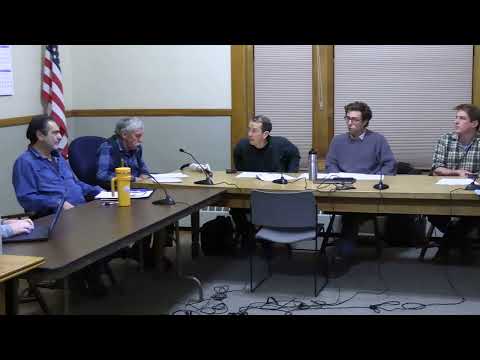
The Harvard Electric Department on Feb. 17 voted to authorize its general manager to enter a power-sales agreement with a Vermont Public Solar Aggregate (VPSA) program that will let the utility purchase a portion of a larger solar installation and provide a fixed monthly bill credit to qualifying low-income customers.
The Chair said the program gives the utility allocation for up to 99 customers who would receive a bill credit of about $25 a month and that the funding for those credits comes from grant dollars, not customer rates. "This power sales agreement is technically the power that those customers are buying," the Chair said, and the agreement enables the program to operate through the utility's billing system.
Board members asked for details about how credits are applied and how customers will be enrolled. One commissioner cautioned the board about program design pitfalls: "I'm always watchful of are we gonna get into something like net metering where residential net metering ... benefited wealthier people and hurt needy people," the commissioner said, framing the board's concern about equitable benefit targeting.
The Chair said enrollment and income verification will be provided by the state agency (Health and Human Services), which will supply lists of eligible customers; VPSA will conduct marketing and outreach using those lists. The board discussed practical rollout mechanics and how vendors will coordinate data with the utility's billing system.
Separately, the board indicated its intent to take its full allocation from the Flatland Solar (Swan) project, a move the Chair described as taking the utility's "maximum allocation" (about 13.4% in the example discussed) so the utility can secure a share of a tax-credit-eligible project. The Chair noted the utility can decline to sign a final contract if terms "come back and it's all of a sudden the numbers are wonky."
The motions to authorize the general manager to enter the VPSA power-sales agreement and to signal intent to take the Flatland Solar allocation were made from the floor and approved by voice vote.
The next step: staff will receive and review the VPSA contract and return with contract language for the board; the utility expects VPSA to begin enrollment work by April with installations and customer billing changes aligned to vendor and CIS (customer information system) integration timelines.