Get Full Government Meeting Transcripts, Videos, & Alerts Forever!
Get email alerts on the Public Comment topic
No spam. Unsubscribe anytime.
Residents describe fear, school absenteeism and business loss as they urge Hood River to declare sanctuary status
Summary
Dozens of residents testified about fear and disruption from ICE activity — including students missing school and lost business at local markets — and asked the council to adopt sanctuary measures, signage, staff training and support for community organizations.
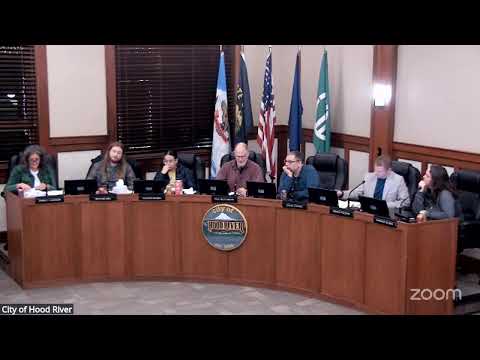
Several dozen residents addressed the Hood River City Council during the public-comment period, offering first-hand accounts of the effects of recent immigration-enforcement activity on families, schools and businesses.
Speakers included parents, a local high-school teacher, students and business owners. Kate Nichols, a high-school teacher, told the council several classes lost half their students for days because families were too afraid to drive to school. A local business owner, Gage, said an estimated 25–33% of his revenue depends on Spanish-speaking workers and customers, and that fear was depressing local commerce. Students described attending class while terrified for their parents’ safety.
Many speakers urged a sanctuary-city declaration to send a public message and to pair that language with practical measures: signage on city property warning that immigration enforcement requires a judicial warrant, know-your-rights training for staff and the public, funding for legal and wraparound assistance, rapid-response teams to monitor ICE activity, and targeted outreach (listening sessions and town halls) that include Spanish-language options.
Representative quote: "Children are afraid to go to school. Parents are terrified to go to work or just the store to buy basic necessities," one public commenter said.
What the council heard: repeated claims that ICE operations targeted nonviolent residents and that those operations have produced measurable local harms — decreased attendance at schools, fewer food-bank visits by Hispanic families, and reduced business at a local Mercado. The council and staff acknowledged the claims and committed to follow-up analysis and next steps; city staff also noted legal and operational limits on what the city can do without creating liability for employees.
Ending: The public-comment session was the emotional core of the meeting and directly shaped the council’s decision to authorize an emergency declaration and ask staff to develop concrete measures and a schedule of follow-up actions.