Get Full Government Meeting Transcripts, Videos, & Alerts Forever!
Get email alerts on the Pensions topic
No spam. Unsubscribe anytime.
Council authorizes state‑authorized lump‑sum retiree payments; chief: 'this is a one‑time bonus, not a COLA'
Summary
The Mobile City Council authorized two one‑time lump‑sum payments for legacy state and transit retirees under recent state legislation. The city chief told council the payments are statutory bonuses, not cost‑of‑living adjustments, and discussed an approaching final payment on an unfunded liability.
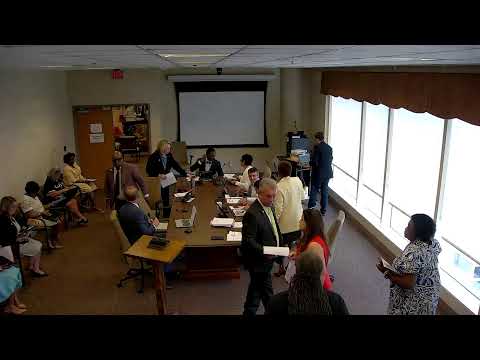
The Mobile City Council on Wednesday authorized one‑time lump‑sum payments for retirees covered by state retirement plans after staff explained the payments were authorized by recent state legislation.
Clerk read two resolutions authorizing payments: $253,440 under the provision cited as section 2 of Act 608 (regular session of the 2026 legislature) for eligible city retirees in the RSA/ERS plan, and $5,656 for eligible Mobile Transit Authority retirees under the same statutory provision.
City Chief (speaking to the council) said the money was a state‑authorized bonus, not a cost‑of‑living adjustment. "This is a one‑time bonus. It's not a COLA," the Chief said, noting that a COLA for state retirees would require enabling legislation at the state level. He also told council members that the last COLA for police and fire retirees was in 2008 and that the city has worked to retire the plan's unfunded liability before adding recurring increases.
Council member Mister Woods asked why the city was contributing to payments for legacy transit plan members who are no longer city employees. A staff member explained these are rare, legacy participants remaining in an older plan; the payout varies by months of service and is small for most individuals.
The Chief estimated that the final payments to retire the unfunded portion of the pension debt would remove roughly $15,000,000 per year from the plan's legacy obligation. He said the Police & Fire retirement plan is city‑controlled and can—on its own schedule—address COLAs, whereas state plans are constrained by state law.
The council did not adopt any separate COLA for state plans at this meeting; the two one‑time payments were presented as actions tied to recent state legislation and the council moved forward with the administrative approvals listed on the agenda.
Next steps: staff will provide details on how individual payments are calculated and any additional paperwork required to execute the lump‑sum distributions.