Get email alerts on the Juvenile Services topic
No spam. Unsubscribe anytime.
Officials warn subacute juvenile-placement services at risk as MCO reimbursements lag
Summary
Board members reported that changes in certification requirements and unreliable managed-care organization reimbursements are creating budget shortfalls for subacute juvenile behavioral-health services, which could reduce local placement options in the North Iowa region.
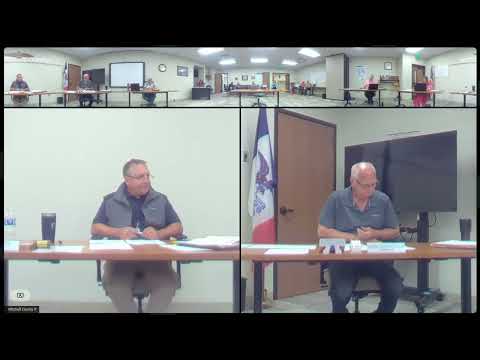
Members and staff at the Mitchell County Board of Supervisors meeting on July 21 raised concerns about regional juvenile behavioral-health services and how funding and staffing changes may reduce placement capacity.
S4 (Committee member) summarized recent meetings with North Iowa juvenile detention and related providers, saying the state now requires higher certifications to staff subacute facilities and that managed-care organizations (MCOs) have been slow or inconsistent in reimbursing care. "The managed care organizations are terrible at reimbursing," S4 said, adding that facilities must repeatedly re-submit paperwork and justify expenses and in some instances do not receive reimbursement. S4 warned that, combined with higher staffing costs, some subacute services may be discontinued and that would reduce regional options for youth in need of stabilization.
S4 said the county and providers are exploring options, including shifting beds from other facilities or creating outreach materials (a two-minute video) to reassure families about the brownstone facility’s purpose. Board members noted that state bed caps and reimbursement shortfalls create limits on expanding capacity despite demand.
The board did not take formal action on the issue at this meeting; members flagged it as a regional service and funding problem that may require follow-up with state partners and providers.
AI generated
The text on this page is AI generated. Summaries, highlights, analysis, and video transcripts are all produced from the original source material.
AI can make mistakes, so if you spot one, and we will fix it for everyone.
Note: the source content is unaltered by us. Any content source we link to, be it a video, an audio recording, or a document, is presented exactly as its publisher released it. That publisher is usually a government body, sometimes an individual official or another organisation.