Get Full Government Meeting Transcripts, Videos, & Alerts Forever!
Get email alerts on the Data Centers topic
No spam. Unsubscribe anytime.
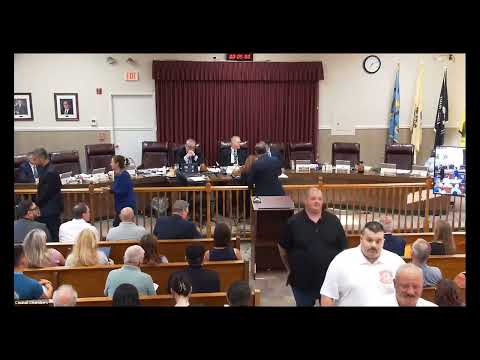
Sayreville council adopts 18‑month moratorium on AI/data centers after packed public hearing
Summary
After more than three hours of public comment, the Sayreville Mayor and Borough Council adopted an 18‑month moratorium on data‑center development to allow engineering, fiscal and regulatory studies; residents urged a permanent ban while some speakers defended potential tax benefits.
The Mayor and Borough Council of Sayreville adopted Ordinance 15‑26 on second and final reading on July 20, 2026, imposing an 18‑month moratorium on development of data centers in the borough to give officials time to draft technical standards and policy. Council President (speaker 3) said the pause will allow the borough to “build the toolbox” — engineering, planning and fiscal studies — before deciding whether and how any data centers could be sited.
The moratorium followed a packed public‑comment period that stretched for hours. John Hsu, who identified himself as living in Edison but said he follows county‑wide environmental risks, urged a permanent ban and argued AI hyperscalers demand large, sustained electricity and water supplies: “AI data centers are different…they require a lot more electricity,” he said, and he warned of long‑term water‑quality risks. Several other residents called for a permanent prohibition on data centers, citing worries about water consumption, noise, local health impacts and the risk that promised jobs would not go to Sayreville residents.
Opponents of a blanket ban argued at council chambers that some parcels — notably the former Hercules property discussed by multiple speakers — are already industrial and might be appropriate for non‑residential development. One resident who supported development said the Hercules site is already being demolished and would not replace green space, and emphasized tax revenues and limited ongoing operations staff at a typical data center.
Council members debated legal risk and enforcement: some members said a permanent ban enacted without technical justification could invite litigation, while other members and several speakers said 18 months is inadequate and urged the council to convert the moratorium into a permanent ordinance. Borough Attorney (speaker 18) advised the council that moratoria must be drafted carefully and that the borough should gather engineering and fiscal analyses to support any long‑term restrictions.
The measure passed on roll call after council discussion; councilmembers said the moratorium gives staff and the borough’s redevelopment and planning professionals time to prepare objective specifications for any future consideration of data‑center projects. Council President (speaker 3) said the borough may extend the moratorium if necessary but hopes the work can be completed within the 18‑month period.
Next steps: borough staff and the Economic Redevelopment Agency will begin work on engineering studies, a fiscal impact review and land‑use specifications for data‑center proposals; the council and attorney said any formal settlement of pending applications or permits will be handled in accordance with state law and the Open Public Meetings Act.