Get Full Government Meeting Transcripts, Videos, & Alerts Forever!
Get email alerts on the Planning Parking topic
No spam. Unsubscribe anytime.
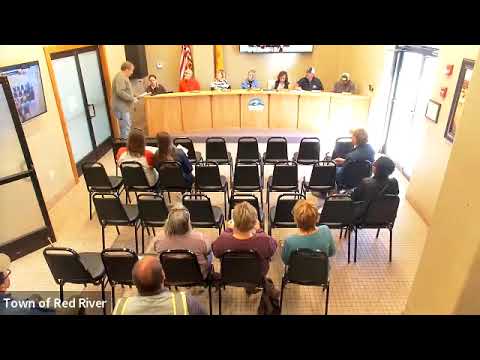
Council denies parking-variance request for River Street lodging conversion
Summary
After a lengthy presentation and safety-focused questioning, the Red River Town Council voted to deny a parking-variance request for a proposed conversion of an ice-rink at 421 River Street into lodging units, citing precedent and long-term parking impacts.
The Red River Town Council voted to deny a parking-variance request for a proposed lodging conversion at 421 River Street after hearing detailed presentation from the applicant and extended council questioning on safety and long-term precedent.
Doug Patterson, the architect representing the applicant Scott Pilgrim’s River Lyric Lodge, told the council the project would convert an existing ice-rink structure into four lodging units and a common space. He said the site currently fits 10 on-site parking spaces but that the town’s occupant-load calculation created a 14-space requirement, leaving the project short by four spaces. “We can only fit 10 spaces on-site,” Patterson said, describing the request to count four on-street spaces as overflow parking and noting the applicant would build a sidewalk and other improvements to reduce impacts.
Council members and staff pressed Patterson on whether the on-street spaces were town property, how church events that fill street parking would affect emergency access, and whether allowing on-street counting would create a precedent. One councilor warned, “You’ve established a precedent,” voicing concern about long-term implications for other developments.
Planning-and-zoning staff told the council the commission had reviewed the request and recommended denial under the current variance standards. After discussion, the council moved to accept the planning-and-zoning recommendation and denied the variance by voice/roll call vote; the motion carried.
Councilors encouraged the applicant to revise the proposal and return. In the meeting the applicant and councilors said they would work together on alternatives, including exploring a different variance narrowly tailored to the residential parking requirement or adjusting unit configurations. No formal approvals or exceptions were granted at the meeting.
The council’s decision leaves the project’s future contingent on a revised application or alternative design that reduces the town-calculated parking obligation or provides on-site solutions.