Get Full Government Meeting Transcripts, Videos, & Alerts Forever!
Get email alerts on the Technology Overlay District topic
No spam. Unsubscribe anytime.
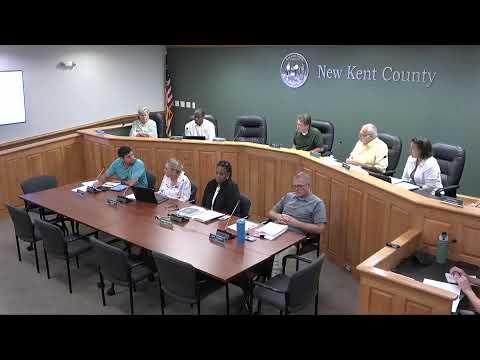
Resident and commissioners press New Kent County for answers after Board halts Technology Overlay District
Summary
At the July 20 Planning Commission meeting a resident accused county staff of giving specific landowners preferential treatment during the now-discontinued Technology Overlay District process; the Board directed staff to stop the overlay approach and draft project-by-project standards, to be presented Sept. 29, 2026.
Sarah Meredith, a New Kent resident, told the Planning Commission on July 20 that county internal records showed certain landowners received special treatment during the county's technology overlay district (TOD) process and asked for a full accounting of how sites were selected.
"The ranking criteria explicitly stated that Jonathan Kinney owned parcels received special consideration," Meredith said, arguing that nondisclosure agreements and developer conversations (she cited an NDA with Amazon) appeared to occur alongside the planning study rather than after a countywide, ownership-neutral review.
The allegation revived a broader question about how the county handled the TOD, a policy the Board of Supervisors instructed staff on July 13 to discontinue as a framework for data-center regulation. The Board adopted a "strong policy preference" that no data-center applications be filed while staff drafts strict performance standards and a project-specific public hearing process such as a conditional-use permit. Staff told the commission the draft ordinance is planned for the Board's Sept. 29, 2026 work session.
County Attorney Mr. Zang briefed the commission earlier in the meeting on how to deliberate land-use applications and urged commissioners to base decisions on the record and applicable law. "Make the decision on the application that's actually before you," he said, stressing the need to cite specific ordinance and comprehensive-plan provisions and to avoid relying on speculation or popularity.
Commissioners and staff discussed what to do when new information—such as FOIA-produced emails—emerges after a vote. Mr. Zang said FOIA records are public and commissioners may weigh community information they hear, but they must ground their votes in the evidence in the record for the pending application. He also said the Board's policy preference does not legally prevent an applicant from filing; applications must still proceed through ordinary review.
Why it matters: Meredith's remarks and the Board's direction underscore continued local concern about transparency and the process by which potentially large land uses such as data centers are evaluated. Commissioners pressed staff for timelines and safeguards; staff said the next formal step is the September Board work session and subsequent public hearings.
The Board of Supervisors' direction and the county attorney's guidance set the near-term process: staff will draft performance standards and a project-specific public hearing path, present the draft for Board feedback on Sept. 29, and then schedule community meetings and formal public hearings after the Board's initial review.