Get Full Government Meeting Transcripts, Videos, & Alerts Forever!
Get email alerts on the Utilities Excavation topic
No spam. Unsubscribe anytime.
Trumbull County officials press for stronger coordination and enforcement after Ohio811 briefing on broadband construction
Summary
At a Trumbull County workshop, Ohio811 warned that a surge in broadband construction and aging utility records are straining locate services; county leaders and state lawmakers discussed new coordination tools, stop-work authority and legislative fixes to reduce safety and service disruptions.
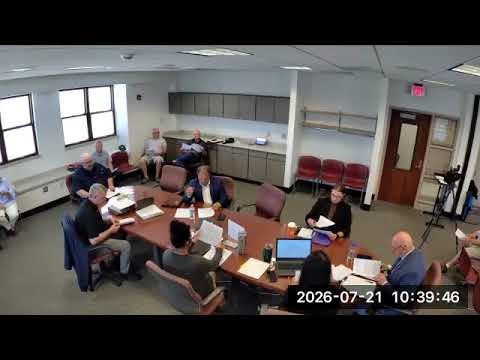
Trumbull County commissioners hosted a briefing from Ohio811 and state lawmakers on the surge of broadband construction and related utility strikes, after residents and trustees raised alarms about damaged lines, long‑standing yard marks and road closures.
Roger Lipscomb, president and executive director of Ohio811, told the commissioners that the call center that processes locate requests has seen rapidly rising volumes: “Last year, we saw 1,700,000 incoming requests for excavation,” he said, noting that each request notifies an average of seven utilities. He described two root causes of recent incidents: aging infrastructure with incomplete records and a private‑equity‑driven fiber build that is producing high‑volume, footage‑paid work that can prioritize speed over local coordination.
Lipscomb outlined short‑term changes already under way and proposed longer‑term fixes. Shorter term: the state has moved to a 48‑hour response window for routine notices and, since June 9, implemented mandatory damage reporting to collect evidence that can inform best practices. Longer term: Ohio811 is seeking authority and funding to operate or license a utility coordination portal (a proposed “Coordinate Ohio”), to require complex‑project design tickets that force pre‑planning among utilities and contractors, and to increase enforcement tools and penalties for repeat noncompliance.
Local officials and trustees pressed for practical, immediate powers. “We need to slow them down,” said the meeting chair, echoing widespread concern that crews are marking and abandoning long stretches of right‑of‑way weeks before work begins. Trustees complained that marks sit unworked for weeks, flags get removed during routine maintenance, and businesses can be harmed by prolonged road closures.
County and township leaders asked legislators attending the meeting to consider giving local permitting authorities limited stop‑work powers, stronger bonding or restoration requirements tied to permits, and access to improved mapping and depth data for buried utilities. Rep. Santucci said he and other local lawmakers plan to coordinate with Ohio811 and county staff to strengthen Rep. Klopfenstein’s draft bill to include provisions the county requests.
Lipscomb also told the group that many marking firms are subcontractors of utilities (for example, firms like USIC and Benchmark are hired by utilities such as AT&T or Enbridge) and that the ultimate responsibility rests with the permit holder and the utility that hires locators. He described a pending coalition effort to limit very large tickets by size and scope and to require a joint stakeholder meeting when a project meets a statutory definition of a “large complex project.”
Officials agreed on follow‑up steps: Ohio811 will provide lists of locators and utilities operating in Trumbull County on request, its staff will meet with the county engineer and township leaders to walk through local issues, and legislative offices asked for written recommendations from local officials to inform amendments to pending bills. The commissioners said they will continue to press contractors to increase use of nondestructive potholing (hydrovac/vacuum excavation) and to require clearer crew identification and communications on site.
The briefing closed with mutual commitments to pursue both near‑term operational changes and statutory clarifications to improve safety, accountability and communication during the county’s broadband and infrastructure upgrades.