Get Full Government Meeting Transcripts, Videos, & Alerts Forever!
Get email alerts on the School Budget topic
No spam. Unsubscribe anytime.
Nome superintendent says non‑tenured teacher offers are on hold as city funding remains uncertain
Summary
Nome School District Superintendent Jamie Burgess told the City Council the district is delaying offers to non‑tenured teachers because uncertain city funding could legally bind the district and risk payroll; city representatives said a rough draft of the city budget will be ready by about the 20th and said they will try to approach the district's $3.5M ask, with some council members proposing $2.7M as a working baseline.
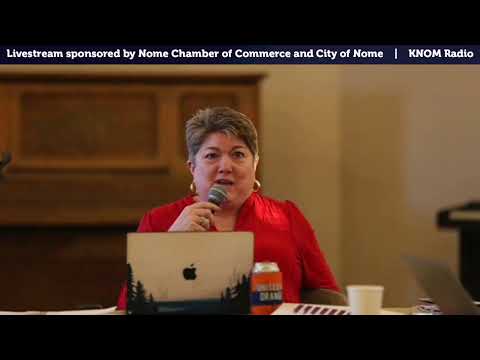
Superintendent Jamie Burgess told the Nome City Council at a work session that the district has held off issuing offers to roughly half of its non‑tenured teachers because of uncertainty over the city appropriation for FY27 and advice from district legal counsel.
Burgess said the district typically issues two‑year offers in March but that legal counsel warned offering and signing contracts before the city confirms its contribution could leave the district unable to reduce payroll later unless a state‑law threshold were met. “We’re not gonna make payroll,” she said as an example of the risk the district wants to avoid if funding falls short.
Why it matters: the district’s budget depends on multiple revenue sources — the state foundation (BSA), the city appropriation, federal E‑Rate for internet, and other local receipts — and staffing is by far the largest cost. District staff warned that if the city provided only the statutory minimum, the district would face a large negative fund balance if it issued all outstanding non‑tenured contracts.
District finance staff Genevieve said the statutory minimum city appropriation is $1,500,000 and that “if the city were to appropriate the minimum of 1.5, we would have a negative fund balance of just under $980,000.” Burgess said the FY27 budget the district presented assumes a $3,500,000 city contribution and accounts for enrollment projections (about 640 brick‑and‑mortar students) and increased numbers of intensive‑needs students.
Council reaction and next steps: council members pressed for an early view of the city’s numbers so the district could decide whether to issue offers. City representatives told the district they would try to produce a rough first draft of the city operating budget by about the 20th–21st and discussed scheduling a special meeting/work session on March 24 to give the district a chance to act. One council participant said they would not recommend dropping below $2.7 million as a working baseline; others said they would try to get as close as possible to the district’s $3.5 million request.
Other budget details: Burgess reviewed revenue sources and cost pressures — a $6,660 current BSA per student, a sharp drop in impact aid in recent years, roughly 90% E‑Rate coverage for internet, and rising property/liability insurance and utilities costs. She said the district plans to use some apartment‑fund rent proceeds (about $225,000) and draw down fund balance (roughly $343,000) to balance FY27 under the presented assumptions, leaving reserves near or below district policy targets unless the city increases its appropriation.
Enrollment and policy context: council members also asked about House Bill 59 and the potential fiscal effect if a new district forms in nearby communities. Burgess said a phased approach is likely and noted the state’s existing “hold harmless” funding mechanism cushions sudden drops larger than 5% in a single year.
What happens next: the city agreed to try to provide a rough draft of its budget in short order so the district can prepare scenario budgets (e.g., what FY27 looks like at $1.5M, $2.7M or $3.5M). The district said it could consider issuing some contracts as soon as a clarified city number is available and discussed a possible March 24 special meeting to allow timely action.
The work session concluded with both sides saying they intend to coordinate more closely on schedule and numbers so the district can make staffing decisions without exposing itself to the legal and cash‑flow risks Burgess described.