Get Full Government Meeting Transcripts, Videos, & Alerts Forever!
Get email alerts on the Development topic
No spam. Unsubscribe anytime.
Council moves forward with 2nd reading for 1310 Tiger Boulevard redevelopment with community benefits package
Summary
Council considered and moved to approve the second reading for a planned redevelopment at 1310 Tiger Boulevard, a mixed‑use student‑focused project proposed by Kennedy Wilson that includes roughly 566 structured parking spaces and approximately $1.825 million in negotiated community benefits; public commenters voiced both support and concerns about hotel loss and traffic.
City staff presented the second reading for a plan‑development application at 1310 Tiger Boulevard, submitted by Kennedy Wilson, that would redevelop the existing Best Western site into a six‑story, student‑focused multifamily building with approximately 226 rental units (752 beds listed in staff notes appears to be part of unit/bed counts) and a roughly 566‑space structured parking garage complemented by service parking.
Staff stated the project comes with negotiated, binding community benefits totaling approximately $1,825,000 dedicated to off‑site infrastructure and community enhancements; the planning commission forwarded a positive recommendation on May 11, 2026, after design workshops and a public hearing.
Public commenters were mixed: some neighborhood representatives and pastors voiced support and described outreach with the developers as constructive; other written comments (provided through MyCivic) raised concerns about losing a 148‑room hotel and the downstream impacts on hospitality tax revenue and downtown accommodation capacity. "Before we eliminate a successful business, we should have a clear understanding of what the City is giving up," one written commenter said, urging council to require protections for adjacent minority‑owned businesses during construction.
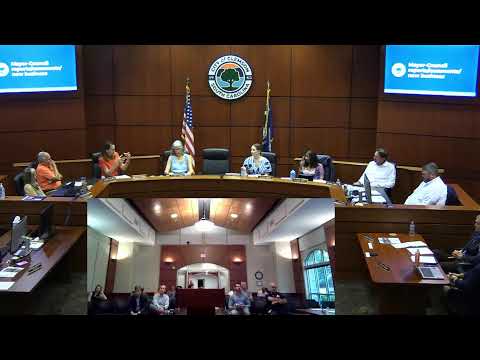
Council then moved and seconded the 2nd reading of the planned development and called for a vote. The transcript records the motion and an in‑chamber vote (members were asked to raise their hands); no roll‑call tally of individual votes was provided in the spoken record.
Why it matters: The redevelopment would substantially change the parcel's land use and supply new student‑oriented housing while delivering negotiated public benefits; opponents raised concerns about hospitality capacity and traffic management during construction.
Next steps: With the 2nd reading moved and a vote conducted in chamber, staff will confirm the official vote tally and any conditions recorded in the ordinance language for public record.