Get Full Government Meeting Transcripts, Videos, & Alerts Forever!
Get email alerts on the Septic Incentives topic
No spam. Unsubscribe anytime.
East Hampton board reviews plan to boost septic‑system incentives for properties closest to priority waters
Summary
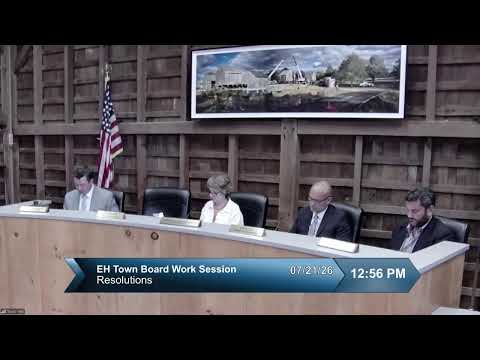
At a July 21 work session, the town’s water‑quality coordinator proposed creating a new highest‑priority groundwater zone and increasing town incentives to encourage replacement of nitrogen‑reducing septic systems; the change would be implemented by ordinance amendment and board resolution.
Melissa McCarron, the town’s principal environmental analyst and coordinator for the Water Quality Improvement Program, told the East Hampton Town Board on July 21 that the Water Quality Technical Advisory Committee recommends creating a new highest‑priority district of properties with a 0–2 year groundwater travel time and raising the town’s septic‑upgrade incentives for that zone.
“Improvements in wastewater treatment in these areas will have the greatest and most immediate impact on water quality,” McCarron said, noting that the town has financed nearly 1,000 systems through the program and has provided just over $16 million in grants since 2017.
Under the committee’s proposal, the town would offer up to $30,000 for eligible properties in the new 0–2 year zone and increase the low‑to‑moderate‑income bump so those homeowners could receive up to $35,000. Properties within the existing water‑protection district would be eligible for up to $25,000 for low‑to‑moderate‑income households and up to $20,000 otherwise; locations outside priority areas would remain eligible for smaller grants. McCarron said the new priority zone would reduce the geographic footprint of the current district from about 11,000 parcels to roughly 4,000 parcels.
McCarron said the town’s funding typically acts as gap support alongside larger state and county programs. She described the New York State Septic System Replacement Program (SSRP) as providing grants for up to 75% of eligible costs and up to $25,000 per property, and said Suffolk County’s septic improvement grant has also increased to as much as $20,000 in some cases. McCarron told the board that typical replacement costs vary widely — she estimated an average around $40,000 but noted some installs can exceed $100,000 depending on soil and groundwater depth — and that the town often covers engineering, surveys and other upfront items county and state grants do not.
Board members said they supported using limited town funds to maximize near‑term water benefits. One council member noted the importance of return on investment and urged targeting properties adjacent to priority water bodies to get the greatest water‑quality improvement per dollar.
McCarron said the change to add a new priority zone would require a revision to town code chapter 2‑09 (the septic incentive program) and that incentive dollar amounts would be set by board resolution. She said staff would work with the town attorney to draft code language and hoped to return a package to the board within weeks.
Next steps: the board directed staff to draft the code amendment and resolution language, and the board may consider the incentive schedule via resolution after the code change is prepared.