Get Full Government Meeting Transcripts, Videos, & Alerts Forever!
Get email alerts on the Transportation topic
No spam. Unsubscribe anytime.
Resident and staff outline plan for downtown "quiet zone" to curb routine train horns
Summary
A resident presentation and staff briefing described how Federal Railroad Administration (FRA) quiet-zone calculations could allow Maysville to reduce routine train horn use at downtown crossings, with targeted mitigation (medians) recommended to lower the city's risk score.
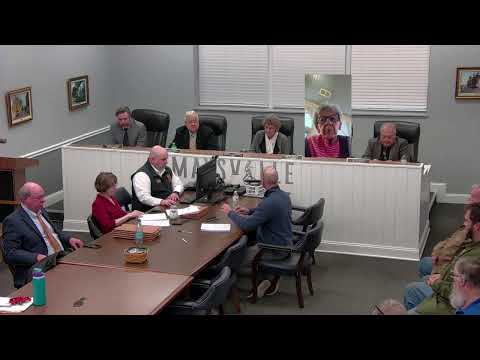
John Ming, a Maysville resident, asked the commission to pursue a railroad "quiet zone" for downtown crossings on West 2nd and East 2nd streets, saying it would reduce routine horn noise and improve neighborhood quality of life.
Ming told the commission, "a quiet zone is a place where the railroad is not required to sound the horn at every crossing," and urged the city to consider the change if costs are reasonable. A staff-level technical briefing referenced an FRA "QZ calculator" and the work of an FRA contact, Dan Manley, who ran risk calculations for the city's eight crossings from Commerce Street to Carmel Street. The presenter said the FRA threshold established in 2021 was 15,488 and that the city's calculated score was about 14,500 — below the 2021 threshold and therefore potentially eligible for a quiet zone now. The presenter recommended a low-cost mitigation at Commerce Street — installing a median extending about 150 feet each direction from the rail to prevent vehicles from driving around lowered crossing gates — which could reduce the city's score to below 10,000 and make the quiet-zone case stronger.
Commissioners and the public asked about safety. Presenters clarified that quiet zones do not prevent train engineers from sounding the horn in emergency situations; the horn requirement is only removed for routine sounding. A panelist said research shows no increase in accidents after quiet-zone implementation, and commissioners requested more public comment and technical follow-up. One commissioner suggested returning the item next month to allow staff time to do more work and to gather public input.
Why it matters: Routine locomotive horns affect downtown livability, local business prospects and residential recruitment. The presentation included a concrete technical pathway (crossing-by-crossing QZ calculations and a suggested median at Commerce Street) that staff said could materially lower the risk score and support a quiet-zone designation.
Next steps: Staff indicated the technical work and public outreach could take a couple of months; commissioners directed staff to pursue follow-up analysis and to include the item on a future agenda for additional public comment and a formal decision.