Get Full Government Meeting Transcripts, Videos, & Alerts Forever!
Get email alerts on the Surveillance topic
No spam. Unsubscribe anytime.
Sheriff's office previews countywide license-plate readers, cameras and drones; grant runs through 2028
Summary
Sheriff's office counsel and staff described a grant-funded "real-time crime center" of license-plate readers, community cameras and drones that the office says helps locate suspects and detect trafficking; staff said the grant funds the program through June 2028 and about 84 devices are active with plans for roughly 270 locations.
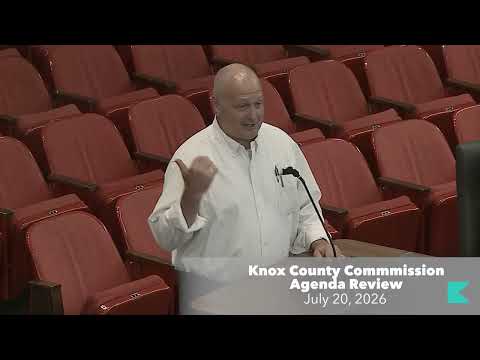
Houston Havassee, special counsel to the sheriff's office, told commissioners the proposed real-time crime center combines license-plate readers (LPRs), community cameras and drones as law-enforcement tools to reduce violent crime and to help locate suspects.
Havassee said the tools help investigators develop leads — for example, linking vehicles seen in Knox County with out-of-area patterns — and stressed that LPRs on roadways point to public locations where there is no expectation of privacy. "This is an effective law enforcement tool designed to reduce crime and catch bad guys," he said.
Hugh Holt, who also spoke for the sheriff's office, said the current deployment includes some 84 active devices, about 270 total planned locations and that 115 of those are in planning stages; 21 devices had been assumed from Knoxville Police Department equipment. Holt said a grant contract funds the center through June 2028 and that if the county continued past that date it would carry the cost.
Commissioners voiced privacy and oversight concerns. Several asked whether a long-term contract exists with the vendor Flock (Havassee and Holt said no 10-year contract is in place and that the grant arrangement is through mid-2028), whether the public had been sufficiently informed when the grant was approved in November, and whether policy drafts could be shared in advance. The sheriff's office said it would provide draft policies, suggested a "lunch-and-learn" or public session and agreed to deliver materials in advance of Monday's follow-up meeting.
Next steps: commissioners agreed to schedule a 3:30 p.m. informational session on Monday so the sheriff's office and vendor representatives can present policies and answer detailed questions; staff will public-notice that session and circulate draft policy language in advance.