Get Full Government Meeting Transcripts, Videos, & Alerts Forever!
Get email alerts on the Land Use topic
No spam. Unsubscribe anytime.
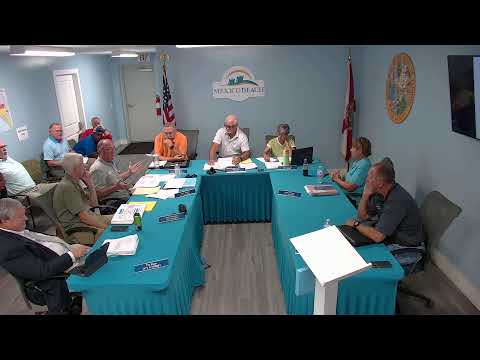
Council tables food-truck canopy and roof policy after wide community debate; returns Oct. 14
Summary
After hours of public comment and council discussion on whether to allow permanent or portable roof structures for food trucks, the council directed staff and the city attorney to develop criteria and LDC language and voted to table the issue until the Oct. 14 meeting.
The Council devoted a lengthy portion of the Sept. 23 meeting to food-truck regulation, focusing on whether to permit roof or canopy structures at mobile-food sites. City staff summarized current code (mobile food vehicles treated like restaurants for parking and landscaping) and reported feedback from the eight existing vendors; most owners favored a roof structure for temperature control and safety.
Residents and councilors raised competing concerns: aesthetics and the risk of turning mobile vendors into quasi–brick-and-mortar establishments; the potential for a proliferation of pole barns along Highway 98; safety and wind-load differences between permanent pole barns and portable aluminum shade structures; and whether the permitted practices would grant unfair competitive advantage over conventional restaurants.
The building official and attorney noted code constraints: accessory structures are generally not permitted on vacant lots under the existing LDC, though precedent and prior approvals (Killer Seafood) have created exceptions. Several council members urged writing explicit criteria for the “hybrid” food-truck model—allowing portable, engineered shade structures while limiting permanent pole barns on leased lots—and to prescribe a period of demonstrated operation before a vendor could qualify for a roof. The council voted to table the issue until Oct. 14 and directed staff to draft options and examine the enforceability of any grandfathering or transition approach.
Why it matters: The decision affects neighborhood character, tourism corridor aesthetics, public-safety and building-code compliance, and the economics of small food businesses.
What’s next: Staff and the city attorney will prepare draft LDC language and objective standards (design, anchoring, setbacks, allowable materials, proof of landlord consent, and duration-of-operation thresholds) for council consideration on Oct. 14.