Get Full Government Meeting Transcripts, Videos, & Alerts Forever!
Get email alerts on the Environment topic
No spam. Unsubscribe anytime.
Local firm offers no-cost dune-plant give-back and native-plant propagation; council agrees to explore partnership
Summary
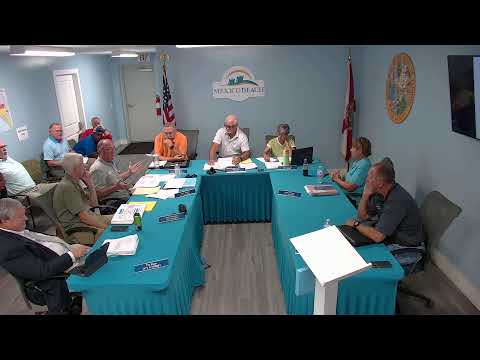
Brandon Pyskin of Gulf Coast Fencing proposed a native-seed/plant collection and propagation partnership that would supply native dune plants to Mexico Beach at no direct cost to the city in exchange for permission to collect local material; council asked staff to draft a legal agreement and training for city crews.
Brandon Pyskin, representing a local dune-restoration business that does hydroponic propagation, asked the council for permission to collect native dune material from permitted areas in order to cultivate plants for restoration projects. Pyskin said his operation can propagate native species faster than traditional bench-grown stock—he estimated a max hydroponic capacity of roughly 400,000 plants at a time—and offered a give-back arrangement where the city would receive a portion of propagated plants for local restoration.
Pyskin described the company’s approach: collect cuttings or seeds from local populations (within a ~50-mile genetic radius when possible), propagate them hydroponically to establish viable plant material within 8–14 weeks, and donate a share (typically 5–10%) as part of a cooperative agreement. He emphasized avoiding disturbance of newly established dunes and said the company would avoid areas the city designates as off-limits.
Council members and residents raised concerns about invasive species (notably Beach Vitex), the timing of seed collection, legal ownership of dune fronts, and how collections would comply with state DEP rules. Pyskin said the group routinely screens collection sites for invasive species and can partner with city staff and area master gardeners for identification and training. Council and staff asked for a written proposal, proof of compliance with DEP rules, and a draft agreement for city counsel to review.
Decision and next steps: The council expressed a preliminary consensus to pursue the idea and directed staff (Julie and the city administrator) to work with Pyskin on legal agreements, species lists, and a training/presentation for city crews before any collecting begins.