Get Full Government Meeting Transcripts, Videos, & Alerts Forever!
Get email alerts on the Utilities topic
No spam. Unsubscribe anytime.
Duke Energy tells Mexico Beach council electric rates to drop in 2026 as company outlines storm-hardening plan
Summary
Scott Mixon of Duke Energy told the council residents should see lower electric bills in 2026 and outlined the utility’s multi-year storm-hardening program, including pole replacements and vegetation management; councilors asked about undergrounding options and costs.
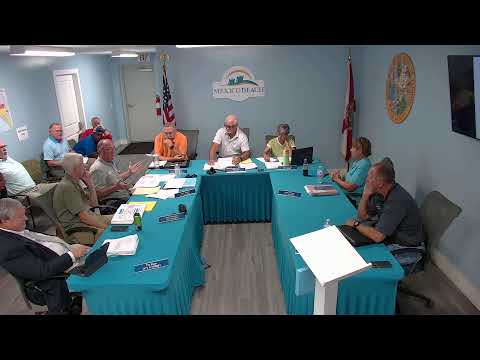
Scott Mixon, who manages government relations and public affairs for Duke Energy in North Florida, told the Mexico Beach City Council at its Sept. 23 meeting that the utility expects to lower residential customers’ electric rates beginning in 2026 and is pursuing a multi-year infrastructure upgrade.
Mixon said the company intends to reduce residential bills by about $44 per 1,000 kilowatt-hours when the rate change takes effect in 2026. He said commercial and industrial customers should expect decreases “between 9.6 to 15, maybe even 16 percent” under the rate plan the company plans to roll out next year.
The company also is pursuing what Mixon described as a storm-hardening program: replacing poles, securing lines, and upgrading substations. He said Duke has a rotating vegetation-management schedule and files a storm-protection plan with the state public-service commission every three years. “By 2028, all of the structures that you see in our territory will either be metal or be concrete,” Mixon said.
Council members pressed Mixon on the costs and benefits of undergrounding lines. Mixon responded that burying existing overhead lines is expensive and technically complex—requiring encasement and special insulation—and that the company deploys undergrounding selectively where the economics and engineering justify it. He said the company has replaced many poles in North Florida and is prioritizing heavy or high-span lines for concrete or metal poles.
The council and several residents also thanked Duke for its recovery work following Hurricane Michael. “People, seven years later, still talking about how grateful we were for them,” a resident said; Mixon said he passes those messages to line crews.
Why it matters: The announced rate reductions and infrastructure investments affect residents’ household energy costs and the resilience of the local grid against severe storms. Council members asked for follow-up data—such as the number of concrete poles already installed and specific locations marked for upgrades—to support local planning and developer communications.
What’s next: Council members asked staff to keep lines of communication open with Duke and to coordinate on developer outreach and potential city audits of municipal energy use. Mixon offered to meet with city staff to discuss an energy-efficiency audit.