Get Full Government Meeting Transcripts, Videos, & Alerts Forever!
Get email alerts on the Youth Services topic
No spam. Unsubscribe anytime.
Panama City officials debate whether to keep ASAP in city hands as nonprofit seeks to build new facility
Summary
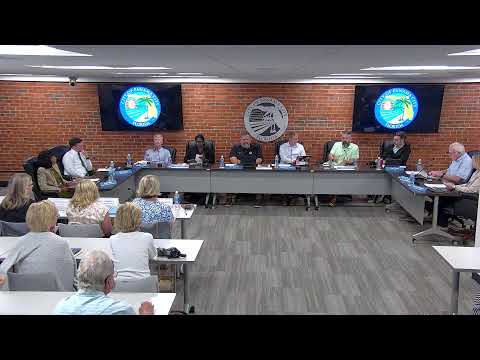
At a Panama City commission workshop, city staff, commissioners and 1 Positive Place representatives discussed a proposal to build a new ASAP after‑school facility and whether the city should continue operating the ASAP program or transition it to a nonprofit; commissioners asked staff and partners to return with options on finance, staffing and governance.
City commissioners, staff and local nonprofit leaders on Tuesday discussed competing options for the future of the After School Assistance Program (ASAP), including a proposal from 1 Positive Place to build a new facility in central Panama City and a recommendation from some commissioners to explore moving operations out of the city.
City Manager Hayes opened the workshop by reviewing ASAP's history, saying the program began in 1993 with the Panama City Police Department and that the city later converted a former motel into a dedicated ASAP facility at 726 East 14th Court. Hayes also said 1 Positive Place has acquired several parcels near 17th and Maybelle Whitfield Way and shared preliminary site and floor plans with the commission.
The discussion centered on two linked questions: whether the city should commit to helping build the new facility and whether ASAP should remain a city‑run program or become an independent nonprofit. Commissioner Lucas framed the conversation as a question of meeting the needs of children in economically challenged census tracts and urged evaluation of the financial model, ownership, partnerships and long‑term stability before any formal decision.
"This conversation is about a building, it's about a place, it's about a program, but it's really about the children," Commissioner Lucas said. "If the answer is yes [to building], then the next question becomes how we provide that service most effectively for the next generation."
Sheila Ware, representing 1 Positive Place, told the commission the group's capital campaign has raised about $1.2 million and that a larger, purpose‑built building could serve "upwards of a 100 plus children" while also acting as a community resource center. "By constructing a larger purpose built facility, ASAP and 1 Positive Place will be able to expand educational programming, provide additional mentoring opportunities and serve significantly more children and families for generations to come," Ware said.
City staff provided recent operating cost figures to ground the governance debate. Brandy, a housing and community services staff member, summarized the last several years of ASAP costs: roughly $275,000 in 2023, $291,000 in 2024 and about $301,000 projected for 2025, with year‑to‑date expenses of about $201,000. Brandy also said the city's CDBG (Community Development Block Grant) public‑service allocation typically contributes about 15 percent of such costs (approximately $60,000–$70,000), with the Friends of ASAP and the Panama City Community Fund covering recurring shortfalls in recent years.
"If you add another facility, you've got more cost," a commissioner said during the discussion, noting that expanding capacity would require additional staff and operating funds. Program staff said state licensing limits the Panavilla site to 23 children and the Glenwood site to 45; a new building would increase capacity but would also add ongoing salary and facility costs.
Several elected officials urged caution about immediately moving ASAP out of city operations. One participant urged a three‑year "stabilization period" to allow grant renewals and operational adjustments after recent disruptions including embezzlement and hurricanes; another participant pointed out that recovered funds and real‑estate proceeds could provide a runway of roughly $1.2 million to $1.5 million to support shortfalls while a long‑term model is crafted.
Other commissioners favored moving toward a nonprofit or hybrid structure to increase agility and fundraising capacity. Suggestions included creating a city‑controlled nonprofit, transferring the program to the existing Panama City Community Fund or Hurricane Michael nonprofit, or structuring a long‑term lease so 1 Positive Place can own the capital asset while operations are managed through a new governance model.
Participants repeatedly emphasized the need for a detailed operational plan before expanding physical capacity. "We can build the facility, but can we afford to staff and maintain it?" one commissioner asked. Staff and nonprofit representatives agreed on next steps: 1 Positive Place, ASAP staff and the city's housing/community services team will collaborate to draft options that address governance, staffing, budgets, grant strategies and possible property transfers; the commission asked staff to return with proposals at a future workshop or meeting.
The workshop concluded without a vote; commission members asked staff and partners to return with the options and financial analyses necessary to make an informed decision.