Get Full Government Meeting Transcripts, Videos, & Alerts Forever!
Get email alerts on the Data Centers topic
No spam. Unsubscribe anytime.
Story County approves two temporary natural‑gas power plants for data‑center campuses, sets multi‑year expirations
Summary
The board unanimously approved two special use permits allowing temporary natural‑gas generator facilities to supply data centers in the Tahoe‑Reno Industrial area, adding sunset conditions (July 2031 and July 2032) and annual reporting requirements to limit long‑term impacts.
Story County commissioners on July 21 approved two special use permits to allow temporary natural‑gas electrical generation plants intended to serve adjacent data‑center campuses in the Tahoe‑Reno Industrial Center.
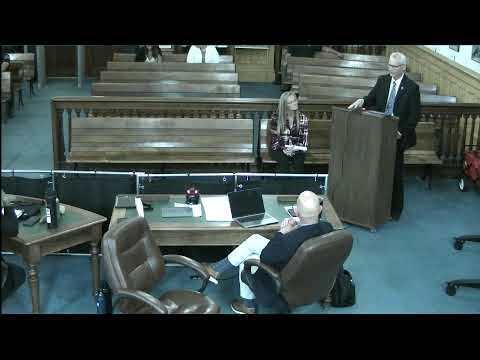
Mitch Nelson, representing Fleet Data Centers and the project team, described two adjacent facilities: SUP 2026‑017 (liquefied natural gas, containerized engines, roughly 90 units) and SUP 2026‑018 (compressed natural gas, roughly 136 units). He said the LNG site expects up to 20 truck trips per day for fuel deliveries and the CNG site up to 80 trips per day. Both projects have been modeled for noise and air quality; applicants told the board they will rely on required state permits (for example, the PUCN UWEPA/OPTC process and NDEP air permits) before construction and operation.
Commissioners added specific time limits and reporting requirements. The board approved SUP 2026‑017 with a land‑use expiration of July 31, 2031 and directed the applicant to apply for any extension at least four months before that date. For SUP 2026‑018 the board approved a land‑use expiration of July 31, 2032 (a six‑year horizon requested by the applicant due to a later start), with the same extension requirement. Planning staff also required an annual update to the planning commission (a condition flagged at the planning commission hearing) to ensure continuing oversight.
On safety and environmental questions, Fire Chief Bob Razzer and the county fire marshal said personnel are trained for suppression and that the fire district has been involved in review. Mr. Nelson emphasized the projects are intended as bridging solutions with no anticipated consumptive water use and with modern emissions controls (SCR on engines). The project team also noted regional economic impacts: the broader Fleet Data Center campus is presented as a multibillion‑dollar capital investment, with the immediate sites described in the hearing as part of a multi‑hundred‑million‑dollar scope and steady on‑site staffing in the high‑teens.
What the permits require: Applicants must secure state air permits and any required public‑works grading and access permits, comply with Chemical Accident Prevention Program notices, and satisfy local fire‑safety requirements. The board included sunset and extension language so the land‑use authorization is time‑limited, and included conditions requiring regular reporting back to the planning commission.
Why it matters: The approvals allow temporary local power capacity for major data‑center customers while the developers and utilities manage long‑term grid upgrades. Commissioners sought to balance operational needs with transparency and time‑limits on land use.