Get Full Government Meeting Transcripts, Videos, & Alerts Forever!
Get email alerts on the Transmission topic
No spam. Unsubscribe anytime.
Story County delays vote on NV Energy transmission segment after landowner and cultural‑site concerns
Summary
The Story County Board of County Commissioners continued consideration of NV Energy’s Mira Loma (Walker River) transmission segment to Aug. 4 after landowners, county staff and public commenters raised gaps in easements, potential impacts to a petroglyph site and concerns about notice and environmental protections.
The Story County Board of County Commissioners on July 21 continued a decision on a special use permit for the Mira Loma (Walker River) segment of NV Energy’s Greenlink Nevada Transmission Project after several residents and members of the planning staff said key property authorizations were not complete.
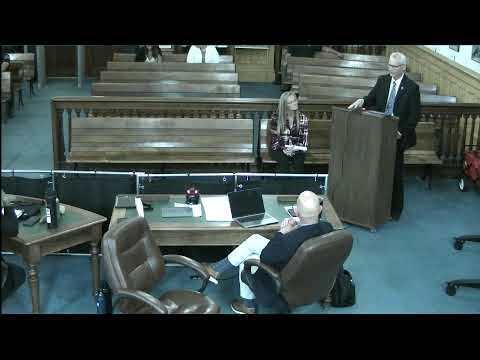
At the meeting, landowner representatives and nearby residents urged the board to delay approval until NV Energy provided parcel‑by‑parcel easements and clearer mitigation for cultural resources and private‑road impacts. Jackson Crawford, who said he represents Sunny Hills (a landowner on the Mira Loma alignment), told the board the application was “incomplete under Nevada Revised Statutes, under Story County code, and Story County’s own routine practices” and that the proposal lacked property owner authorization for more than 800 acres the line would affect.
NV Energy’s local permitting lead, Charles Hutchinson of WSP, told commissioners the company has been through planning and landowner outreach and that it has obtained signed agreements or affidavits for most crossings: “There are 11 landowners that the three lines cross. We’ve obtained signed affidavits and/or easements from eight. Three are in the eminent‑domain process,” he said, adding that the company will not enter property without a signed easement, affidavit or court‑ordered possession.
County planning staff and legal counsel told the board they developed a set of conditions, including a parcel‑by‑parcel consent requirement (referred to in the hearing as condition K) and measures to address off‑road vehicle trespass and access road reclamation (condition M). County legal counsel said the board retains discretion but that proceeding without all easements is an unusual approach for the county.
Members of the public also pressed for explicit, mapped protections for a nearby petroglyph site and for stronger commitments to protect private HOA roads and waterways from construction runoff. Joe Sharmesan of Virginia Ranches said that “32 of the 33 miles in the Mira Loma segment are not on public land,” and asked the board to require more detailed routing and access plans before approval.
After more than two hours of presentations, questions and public comment, Commissioner Mitchell moved to continue the item to the board’s next regular meeting on August 4 to allow staff and the applicant to reconcile landowner records, respond to written comments, and refine or add conditions. The motion passed unanimously.
What’s next: The applicant may return with revised materials, an accounting of outstanding easements, and any proposed changes to the board’s recommended conditions of approval. NV Energy said in the hearing that construction would be staged only after required easements and all local, state and federal permits were in hand.
Why it matters: The Greenlink project is a high‑voltage transmission program driven by state law and federal permitting timelines; commissioners said they want to ensure private‑property rights and cultural‑resource protections are resolved locally before the county authorizes land use that would enable construction.