Get Full Government Meeting Transcripts, Videos, & Alerts Forever!
Get email alerts on the Uptown Code Of Conduct topic
No spam. Unsubscribe anytime.
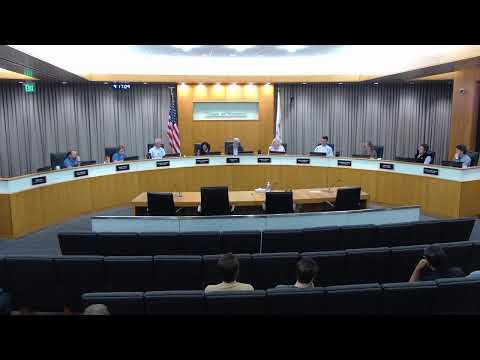
Residents and service providers urge delay on Uptown Station code of conduct; council declines tabling motion
Summary
Public commenters, service providers and people with lived experience urged the Town of Normal to delay an amended Uptown Station code of conduct, saying it risks criminalizing homelessness and needs more coordination with local providers. The council voted down a motion to table and directed staff to convene partners for further review.
Dozens of residents, social-service providers and people with lived experience told the Town of Normal Council they want more time and collaboration before the council adopts changes to the Uptown Station code of conduct, which officials say would regulate camping, sleeping, obstructing ADA routes and leaving personal property unattended at the transit facility.
The public-comment period featured multiple appeals to delay the ordinance. Abigail Sample, who said she has been homeless on and off for nine years, told the council, “We don't deserve to be treated like we are nothing. We are human beings,” and asked members not to vote on the measure that night. Adam Lovell, community services director for the Salvation Army and cochair of the McLean County Housing Coalition, asked the council to postpone action and work with service providers, citing ADA and enforcement concerns. Dave Bentlin of the Central Illinois ACLU said his office flagged constitutional questions in the draft and requested time for a written legal review.
Council members and staff framed the measure as behavior-based, not a ban on homelessness. Councilmember Byers described the ordinance as narrow and targeted to ensure safe use of the station, noting the ordinance “explicitly says in multiple sections that enforcement cannot be based solely on a person's housing status, appearance, condition of poverty, or disability.” Staff also said the town maintains an active partnership with Home Sweet Home Ministries and the Salvation Army and funds outreach through Community Development Block Grant dollars.
Miss Lorenz moved to table the ordinance for two weeks so staff and legal counsel could consult with social-service partners and review ACLU feedback. That motion failed on a 3–4 roll call (Ayes: Robersh, Preston, Lorenz; Noes: Byers, Smith, McCarthy, Mayor Coos). After the failed tabling motion, Councilmember McCarthy asked staff to convene a meeting with service providers and other stakeholders; that motion passed (Ayes: Smith, McCarthy, Preston, Byers, Mayor Coos; Noes: Robersch, Lorenz). The council did not take a final recorded vote to adopt the ordinance during the meeting transcript.
Speakers on multiple sides urged the council to balance public safety and access. Several social-service leaders emphasized that the bridge shelter village has provided shelter for about 54 people but that additional permanent affordable housing is needed; a town official stated the county has about $19,000,000 set aside for related purposes and urged better coordination on spending those funds.
Next steps: Council directed town staff to convene social-service partners, legal counsel and affected agencies for a near-term discussion to identify implementation steps and potential ordinance adjustments. No adoption vote is recorded in the portion of the transcript provided; the matter was left open for further coordination.