Get Full Government Meeting Transcripts, Videos, & Alerts Forever!
Get email alerts on the Building Permits topic
No spam. Unsubscribe anytime.
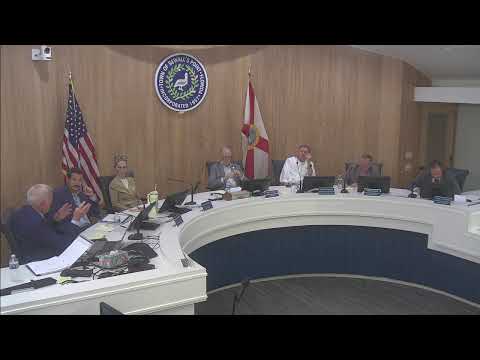
Sewall's Point adopts revised building-permit fee schedule after debate
Summary
The Sewall's Point commission voted 4–1 to adopt Resolution 1002-26, replacing contract-price permit fees with an ICC-based valuation and a 1.6% multiplier and adding administrative and zoning review fees for exemptions under $7,500. Staff warned the change could reduce permit revenue and will be reviewed during the August budget workshop.
The Sewall's Point Town Commission voted 4–1 on July 21 to adopt Resolution 1002-26, implementing a revised building-permit fee schedule that replaces contract-price fees with an International Code Council (ICC) valuation method and a 0.016 multiplier (1.6%). Jack Reisinger, the town's building official, led the presentation and said staff used the ICC valuation and the multiplier to calculate a base permit fee and then added a small multiplier to cover inspection and administrative costs.
"We came up with the multiplier of 0.016," Reisinger said, explaining that the town compared its calculations with neighboring municipalities and adjusted the multiplier to reflect Sewall's Point's size and inspection needs. He told commissioners the method is intended to comply with a state law change effective July 1 that forbids basing permit fees on contract price and requires a standardized valuation approach.
Commissioners pressed staff on how the fees were computed and what would happen to smaller projects. Commissioner Titicus said he supported quality inspections but warned against charging more than necessary: "I'm all for the quality of life. I'm just not, all for basically charging more than we need to charge." Reisinger and the town manager responded that the schedule includes an exemption pathway for jobs under $7,500, but that those exemptions would require a $75 administrative-processing fee and a $100 zoning review where applicable.
In the discussion, staff noted a range of comparators: Martin County and the City of Stuart were cited as adopting different ICC rates or multipliers. Reisinger said the town's calculations produced an example permit fee near $11,200 for a 4,000-square-foot home under the ICC valuation and the chosen multiplier; he also estimated the change could produce roughly a 25% reduction in permit revenue for larger projects, although he emphasized the figure was an early estimate and that the town will monitor results.
The commission approved the resolution and the revised fee schedule by roll call (4–1). The record shows Commissioners Kirsman, Vice Mayor Mayfield, Commissioner Bender and Mayor Burrell voted yes; Commissioner Tadekis voted no. Several commissioners said the schedule can be revisited during the August budget workshop, when staff will present a forecast of the fiscal impact.
Why it matters: the change implements a statewide statutory requirement and resets how the town recovers building-inspection and plan-review costs. Staff said the schedule reduces reliance on contract-price-based fees, aligns the town with ICC valuation, and preserves local inspections and code enforcement. The commission instructed staff to bring a fiscal forecast and to be prepared to adjust the multiplier or related administrative fees if the budget workshop shows greater-than-expected revenue shortfalls.
Next steps: staff will include a revenue-impact forecast in the Aug. 8 budget workshop and will return to the commission if adjustments are recommended.