Get Full Government Meeting Transcripts, Videos, & Alerts Forever!
Get email alerts on the Property Tax topic
No spam. Unsubscribe anytime.
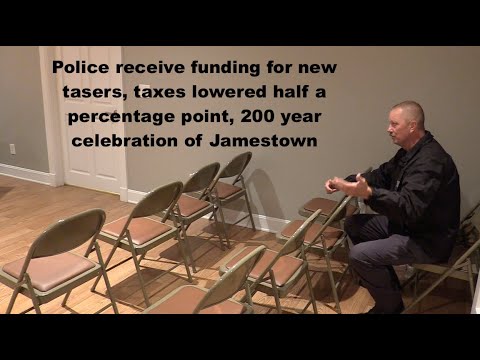
Jamestown council adopts second‑reading ordinance to lower property tax rate
Summary
At a council meeting, members approved a second-reading ordinance reducing the city property tax to 13.7 cents per $100 assessed value (Ordinance read in meeting as '20 24 0 0 5'); the measure was adopted by voice vote and bills will be mailed Nov. 1.
The Jamestown council approved a second‑reading ordinance to lower the city property tax rate at a regular meeting.
The ordinance, read aloud in the meeting as “Ordinance 20 24 0 0 5,” sets real and certain personal property — including public service company property — to be taxed at "13.7¢ per 100" of assessed value as determined by the Department of Revenue. The text read during the meeting also noted a 2% discount for taxes paid by Jan. 31, 2025, and a 10% penalty plus a $3 newspaper‑publication fee for delinquent 2024 taxes.
“ The 1st thing we've got is we've got a 2nd reading code ordinance tonight on our, city tax,” said the Chair, introducing the item. The Clerk read the ordinance text and explained assessed values and the treatment of financial institution deposits under the measure.
A motion to adopt the ordinance was made and seconded during the meeting; Council approved the measure by voice vote. The Clerk told the council that tax bills will be mailed on Nov. 1.
Why it matters: The council's action reduces the millage from the previous local rate (discussed in the meeting as 14.2 per $100) to 13.7 per $100, which will slightly lower property tax bills for residents and businesses within Jamestown's taxing jurisdiction. The ordinance's full text, as read aloud in the meeting, included payment deadlines, discounts for early payment, and penalties for delinquent accounts.
The council adopted the ordinance by voice vote; the meeting record did not contain a roll‑call tally. The council did not specify a separate effective date beyond the passage and publication language read into the record.