Get Full Government Meeting Transcripts, Videos, & Alerts Forever!
Get email alerts on the Surveillance Privacy topic
No spam. Unsubscribe anytime.
Resident alleges pan‑tilt Flock cameras can identify people, files opt‑out and data‑deletion request
Summary
At public comment, Nate Harris alleged Flock 'condor' cameras in the city's $4.5 million rental can identify and track people, accused a prior Flock presentation of misinformation and submitted a formal data‑deletion/opt‑out request for his biometric data.
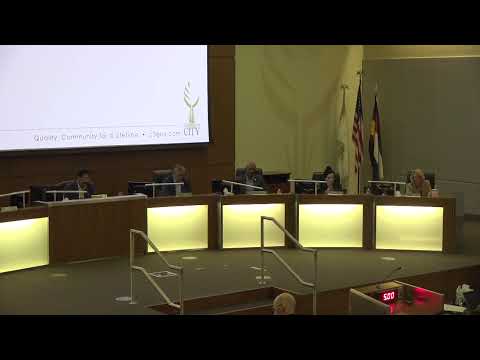
During public comment, resident Nate Harris told the council he believes the city’s rental package with Flock includes pan‑tilt ‘Condor’ cameras capable of human identification and tracking, and he said he is submitting a formal permanent opt‑out and data‑deletion request to the city.
Harris said the devices are not limited to roadways and instead follow pedestrians and cyclists; he further alleged that a Flock representative (Trevor Chandler) previously told the council the cameras did not have facial‑recognition capabilities and that statement was incorrect. “Your $4,500,000 rental package from Flock includes an undisclosed number of their Condor cameras, which are capable of human identification and tracking,” Harris said, later asking the city manager and city attorney to acknowledge receipt of his opt‑out paperwork.
The mayor declined to handle the request in‑the‑moment (public comment rules), and staff said the city attorney would review any records‑custodian submissions. Harris cited what he called the Colorado “Bridal” Act in his remarks (the transcript text records that phrasing), which appears to be a misstatement of a statutory reference; the council did not take action at the meeting. City staff said they would ensure the submission is routed to the appropriate office for response.
No formal staff response or motion was recorded at the meeting; the opt‑out submission was noted for administrative follow‑up and the city attorney’s office was expected to review potential legal implications and respond in writing to the submitter.