Get Full Government Meeting Transcripts, Videos, & Alerts Forever!
Get email alerts on the City Management topic
No spam. Unsubscribe anytime.
City officials outline audits, police station timeline and wastewater upgrades at Ione town hall
Summary
City staff updated residents on progress closing audit backlogs, moving into a new police station funded from restricted impact fees, and wastewater plant upgrades that officials said are cutting chemical costs and resolving permit issues.
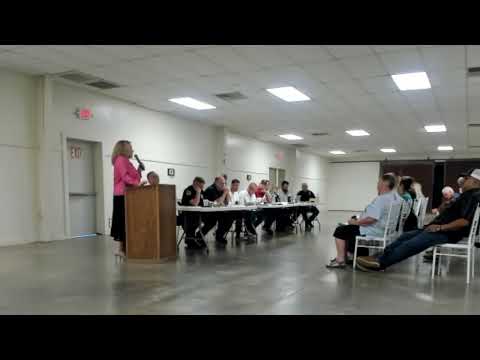
City officials used an Ione town hall to outline administrative progress on audits, capital projects and wastewater improvements, and to tell residents how those efforts affect city finances.
Andrew Bono, who has been leading the audit catch-up, told attendees the city has worked through a backlog caused by repeated staff turnover. He said limited procedures were completed for recent fiscal years, the draft 2023–24 audit had been received and a management response would be brought to council on Aug. 8 with expected acceptance on Aug. 18.
The city manager summarized revenue steps taken since the new administration arrived, including moving funds into a money‑market account that he said produced about $1,030,000 in interest versus prior years when funds were held in checking accounts. He also said payments from CDCR for water treatment were renegotiated, producing what staff described as roughly a $600,000 increase in revenue.
Police Chief John Alfred reported construction work on a new police station is near completion and the department expects to move into the building in about a month. He said finishing costs were estimated at about $169,758.27 and that the project is being paid from restricted PD impact fees (developer-paid funds), not the general fund. Chief Alfred said later phases — animal control and dispatch — will require separate budgeting and could take one to several years.
Wastewater operator Justin Granados described plant modernization including new sand filters, a PLC/SCADA control “brain,” turbidity and chlorine analyzers and other chemical-feed improvements. He said upgrades reduce chemical usage and operating costs; past chemical spending exceeded roughly $70,000 a year, and he expects costs to be under $25,000 this year. Granados also said Title 22 permitting and a tracer study were completed, and that cleanup and abatement issues from prior operators had been addressed.
Fire department remarks (fire chief introduced in meeting as Kate Nike) noted a combination department of volunteers and paid staff that keeps operational costs lower but faces pressure from rising equipment and operational costs — staff said a new structural engine can cost more than $1 million and turnout gear about $4,000 per set.
Officials encouraged residents with detailed questions about budgets, invoices or warrants to meet in person at City Hall and said staff will provide vendor/payment reports and clearer budget breakdowns at upcoming meetings.