Get Full Government Meeting Transcripts, Videos, & Alerts Forever!
Get email alerts on the Land Use topic
No spam. Unsubscribe anytime.
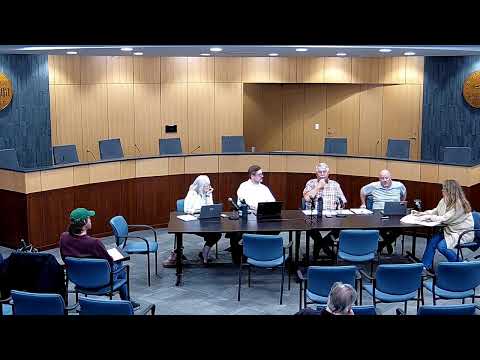
Town board debates special-use permit for wellness campground at 1196 Big Tree Road
Summary
The East Aurora Town Board spent extended discussion on a special use permit for a wellness-themed campground at 1196 Big Tree Road, focusing on traffic, accessory uses (a spa and pavilion), parking reductions with land-banking, occupancy limits and noise controls; no final vote was recorded at the work session.
East Aurora's town board opened a work session item on a special-use permit application for 1196 Big Tree Road, a proposed wellness-themed campground with a spa and open-air pavilion. Chair (S4) introduced the item and said the board would consider the special-use permit's restrictions and conditions rather than building-code issues, which staff confirmed are already approved by the code enforcement officer.
Town staff and the applicant debated whether the spa and pavilion would be accessory uses to the campground or a separate commercial operation. Town planner/staff member (S7) read the town-code definition of accessory use, concluding the spa would qualify as an accessory use because it would be subordinate to the campground. Applicant (Applicant (S3)) and a representative (Representative (S5)) said accessory amenities commonly allow some limited outside use and that limiting every non-guest visit would not fit the business model. "The spa is going to be used by guests at the campground," Representative (S5) said, adding that accessory uses can be open to outside users so long as they remain subordinate to the principal use.
Board members pressed the applicant for operational safeguards. The applicant proposed reducing parking from the code-prescribed 51 spaces to 30, with the remaining 21 spaces "land-banked" and required to be installed if monitoring showed overflow. "We're looking for 30 parking spaces," Representative (S5) said; the board asked for a parking-management plan and agreed that the applicant should provide monitoring (camera or on-site checks) and a written condition to prevent spillover parking onto Cook Street.
Occupancy and event limits were a second focal point. Applicant (S3) said the lodge/pavilion seats about 70 and the full-site overnight capacity would be about 36 guests at typical couple occupancy; the board asked the applicant to propose a maximum event size and to limit public events. Town planner/staff member (S7) noted that large, public festivals would likely require a separate use variance and that the special-use permit should explicitly prohibit concerts or mass public events.
Public-safety and nuisance concerns surfaced on fire pits and quiet hours. Several members urged prohibiting open wood fires and permitting propane or enclosed pits for individual sites and the pavilion; board members said quiet hours around 10 p.m. should be a permit condition and that amplified music be restricted. The applicant said on-site staffing (a caretaker/security presence) and sound-mitigation measures such as fencing and natural barriers would be part of operations.
The board did not take a final vote on the permit at the work session. Staff asked the applicant to return with written proposed permit conditions addressing parking (30 spaces with land-banked overflow), a maximum event size, a plan for guest vs. day-user access to the spa and pavilion, propane-only or enclosed fire-pits, quiet hours enforcement and on-site staffing; the board indicated it would consider a variance for fence height if needed. The item will return to a future agenda for formal action once conditions are submitted.
Ending: The board concluded discussion by listing the specific points it expected in a proposed condition set and asked staff and the applicant to work together before placing the permit on a future agenda.