Get Full Government Meeting Transcripts, Videos, & Alerts Forever!
Get email alerts on the Park Impact Fees topic
No spam. Unsubscribe anytime.
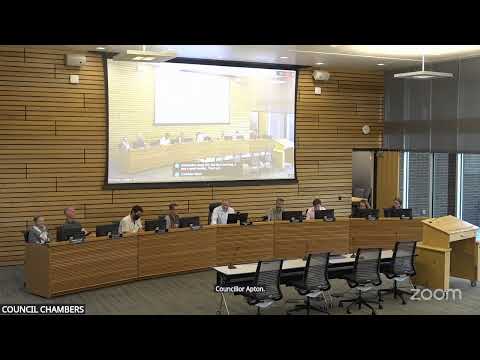
Kenmore council amends park-impact fee to 80%, schedules public hearing and asks staff to study tiered rates
Summary
The Kenmore City Council voted 4–3 to amend an ordinance to set the proposed park-impact fee collection rate at 80%, directed staff to schedule a public hearing and to study a tiered/ progressive structure to protect smaller units; final adoption was postponed for further public input.
The Kenmore City Council voted 4–3 on July 20 to amend ordinance 26-0643 so the city would collect 80% of the proposed park-impact fee, then directed staff to hold a public hearing on the amended ordinance and to research whether a tiered fee structure could better protect smaller units.
The amendment was offered by Council member Culver and passed after a council debate that divided members along concerns about funding parks versus housing affordability. Culver framed impact fees as a common way for growing cities to have new development pay for new infrastructure, saying, “Accordingly, I would move to amend the rate collected to 80%.” Supporters argued the change would raise substantial funds for indoor recreation and park projects that the community requested; several members and public commenters cited the consultant recommendation for a higher rate.
Public commenters endorsed stronger fees. Tracy Banashinski told the council that impact fees are “a critical part of making this happen” and urged the council to adopt a rate closer to the consultant’s recommendation (80–90%). Elizabeth Mooney urged the council to “please pass a 100%” fee on developers of high‑end homes. Jim Myers also voiced support for a progressive fee structure, saying the fee would be a small share of new construction costs and would help sustain parks.
Opponents cautioned that higher fees could push costs onto buyers and make the city less affordable for younger households. Council member Lutzes warned that “each thousand dollars that we add in fees here and there, will make it less likely that our community will attract younger families,” and argued for a tiered approach that keeps lower rates for smaller units while applying higher fees to larger homes. The city attorney and staff advised that because the amendment proposes a substantive change after the July 13 hearing, an additional public hearing is legally required before final adoption.
After the 80% amendment passed, councilors voted unanimously to postpone final adoption and asked staff to return with the legally required public‑hearing notice and an analysis of whether a progressive or tiered fee methodology could be incorporated into the ordinance’s methodology attachment. The council identified a possible public hearing and follow-up schedule in September.
What’s next: staff will prepare the public‑hearing notice for the amended ordinance and report back on the feasibility and methodology for a tiered fee structure. The council indicated a likely public‑hearing date in September and potential final action thereafter.