Get Full Government Meeting Transcripts, Videos, & Alerts Forever!
Get email alerts on the Congressional Transparency topic
No spam. Unsubscribe anytime.
Witness urges House to make congressional data authoritative online and warns AI can spread inaccuracies
Summary
A witness before the House Administration subcommittee urged the House to modernize how it publishes legislative and public data — recommending APIs, structured explanations and feedback loops so authoritative House sources power AI and public information.
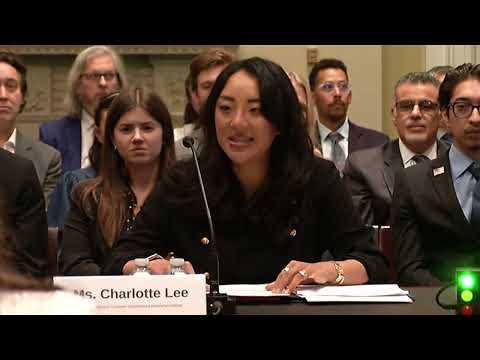
A witness testifying before the House Administration subcommittee on Wednesday urged Congress to modernize how the House publishes legislative and public data so that authoritative sources can power AI tools and broaden public access.
The witness addressed "Chairwoman Vice, Ranking Member Torres, and members of the subcommittee," and said her professional and personal experience — including growing up translating government forms for a non-English-speaking parent — shaped her view that access to information is fundamental to democratic participation. "The challenge is how the house meets people where they are by demonstrating representation," the witness said.
She told the panel that legislative texts and status records are complex and that current interpretation tools often sit behind paywalls, creating unequal access for staffers, lobbyists and everyday constituents. "For an individual to track these changes across thousands of pages of code is nearly impossible without specialized help," the witness said.
The witness warned that artificial intelligence is already shaping public understanding of policy: "AI generated answers now reach 1,000,000,000 people a month," she said, adding that many AI responses are built from blogs, press and trade association sites rather than primary House records. To counter that risk, she urged the House to be the "primary trusted source of truth wherever dialogue is happening."
Her recommendations included investing in modern, well-documented application programming interfaces (APIs), building neutral explanatory layers that make legal and status information understandable, and creating structured, bounded feedback channels so the House can acknowledge and process signals from users. "Invest in modern, well documented APIs and clear, neutral explanation layers so that trusted data surfaces truth reliably in the public square," the witness said.
She described a vision for a "digital people's House" modeled on the library experience: personalized pathways for different users — educators, journalists, constituents — and interfaces that provide context and next steps. She also urged the committee to commit to feedback loops: "No institution can serve a public it has difficulty listening to," the witness said.
The witness closed by posing a central question for the subcommittee: "How might Congress use technology to assert its place as the authoritative source of truth and representation?" She said she looked forward to questions from members and to continuing work on the topic. The hearing proceeded to a question-and-answer period following her testimony.