Get Full Government Meeting Transcripts, Videos, & Alerts Forever!
Get email alerts on the Government Technology topic
No spam. Unsubscribe anytime.
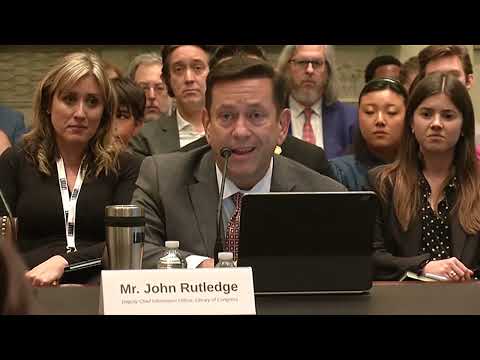
Library of Congress official tells House panel congress.gov redesign, cites AI-driven traffic surge
Summary
A Library of Congress official told the House Administration subcommittee that congress.gov will get a user-centered redesign and search upgrades, citing nearly 500 million annual page views and a recent 24‑hour period when a human verification check blocked about 98% of traffic as nonhuman. The library cited two FY27 budget requests—an AI enterprise platform and web application delivery—to support the work.
A Library of Congress official told the House Administration subcommittee that the library is moving to redesign congress.gov and bolster its search and infrastructure to serve both members of Congress and the wider public.
The official said the library’s two most popular websites, loc.gov and congress.gov, “see nearly 500,000,000 page views each year,” and emphasized that scale as a reason to prioritize user experience and reliability. The testimony noted that different user types — from members checking bills on mobile devices to teachers using the site in classrooms — require a user‑centered approach.
The official framed AI as both a challenge and an opportunity for the library’s public sites. “In a single 24 hour window last month, our human verification check on congress.gov blocked approximately 98% of incoming requests as nonhuman traffic,” the witness said, describing operational strain on systems. At the same time, the testimony argued, AI tools could expand public access to information if implemented with attention to authenticity and objectivity.
The witness outlined the library’s five‑phase user experience research process — discover, define, ideate, prototype and validate — and said the office recently completed the discover phase through one‑on‑one interviews. Based on that research, the library’s near‑term priorities are updating the site’s design and improving search. The official said a prototype of the updated congress.gov interface will be validated with congressional users “no later than the end of this calendar year.”
To support longer‑term work, the speaker described two items in the Library’s fiscal 2027 budget request: an AI enterprise platform to enable experimentation and implementation of AI‑based tools, and a web application delivery request to support infrastructure and deployment. One example the witness offered was exploring how the site’s popular “ask a librarian” feature, combined with AI tools, could enhance congress.gov search functionality.
The testimony placed the current work in historical context, noting that separate legislative systems in the 1990s (Thomas and the Legislative Information System) produced a “digital disconnect” and that congress.gov launched to the public in September 2012 to unify legislative data and modernize access. The official said new features — including committee schedules and videos, publicly available Congressional Research Service reports, bulk data download and an API — now bring more users to the site.
The witness closed by thanking the subcommittee for recent investments in library technology and by inviting continued partnership as the library progresses through the design and testing phases.
The subcommittee is expected to question the witness following the testimony; no formal votes or committee actions were recorded in the prepared remarks.