Get Full Government Meeting Transcripts, Videos, & Alerts Forever!
Get email alerts on the Urban Renewal Grants topic
No spam. Unsubscribe anytime.
Myrtle Creek urban renewal board removes "every-other-year" limit on building improvement grants
Summary
The Myrtle Creek Urban Renewal Agency voted to remove an "every-other-year" restriction on its building improvement grant program, allowing annual, case-by-case consideration of grant requests; one board member voiced opposition during a verbal vote.
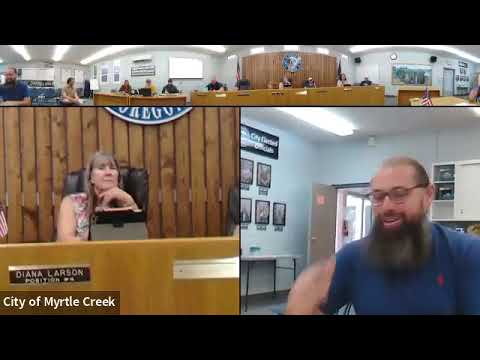
The Myrtle Creek Urban Renewal Agency voted to remove an "every-other-year" limitation in its building improvement grant policy and instead allow annual, case-by-case review of grant applications, board members said during the agency's May meeting.
Proponents argued the change will allow flexibility for larger redevelopment projects and prevent partially completed projects from languishing. "A completed project should not become ineligible solely because it was successful," a public commenter who identified himself as Byron Mangelo said during public comment, describing how staggered funding could delay visible downtown improvements.
Board members debating the amendment cited differing aims: some said the city should spread limited funds among more businesses, while others said the program should reward momentum and support larger investments that attract more private capital. Supporters noted existing program safeguards and the board's discretion to deny awards that appear abusive.
A motion to remove the every-other-year clause and adopt annual, case-by-case review was made, seconded and carried on a verbal vote. At least one board member voiced recorded opposition during the roll call (identified in the meeting transcript as "Rick"). The board did not record a formal roll-call tally in the transcript for the motion; meeting remarks indicate the chair declared the motion carried.
After the vote, members discussed additional proactive steps for downtown, including potential coordinated painting initiatives and planned sidewalk repairs to meet ADA standards.
The amendment applies to the urban renewal building improvement grant program for FY 2026–27; the board instructed staff to reflect the change in application materials and to retain case-by-case discretion when reviewing individual award requests.