Get Full Government Meeting Transcripts, Videos, & Alerts Forever!
Get email alerts on the Lead Service Lines topic
No spam. Unsubscribe anytime.
Hinsdale trustees hold first reading on how to pay to replace lead water service lines
Summary
At a July 21 first reading, village staff presented inventory and three funding options to meet federal and state mandates to replace lead service lines starting in 2027; trustees split over whether taxpayers should subsidize private-side replacements and asked staff for a draft policy before an Aug. 11 adoption vote.
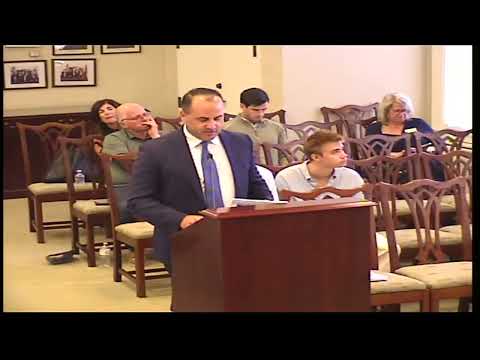
On July 21 the Hinsdale Board of Trustees held a first reading of a resolution to establish a village policy for replacing lead water service lines, part of a federal and state mandate that will require municipalities to remove and replace lead service lines on a 10-year schedule starting in 2027. George Paluso, introduced to the board as an associate working with village staff, presented the village's inventory and three funding options.
Paluso told trustees the village has "a total of 5,786 total water service lines," of which 197 are known lead and 205 are listed as unknown. "We're carrying this 300 number currently as our planned replacement number for the next 10 years, which would be 30 per year," he said.
The presentation laid out three funding models: (1) a village cost-share that pays from the water main to the B-box and reimburses homeowners 50% of the private-side cost, capped at $6,000; (2) a straight 50/50 split between village and homeowner; and (3) the village pays public-side work to the B-box while homeowners pay 100% of the private-side work. Paluso described plans to use trenchless drilling where feasible to minimize home intrusion and to include pay items in village contracts for foundation patching and meter connections while leaving interior restoration to homeowners.
Trustees pressed staff on timing, scope and money. Staff gave high-end cost estimates of about $20,000 per full-service replacement and said the private portion is being carried at roughly $12,000 per home in current planning documents. One trustee summarized the village exposure under a broad cost-share model as "approximately $3,600,000 over 10 years" for the village portion of private-side work in the model discussed.
Trustees split on policy choices. One trustee supporting the village-absorbs-most approach proposed a hardship carve-out tied to federal adjusted gross income (AGI), saying residents with a two-year AGI at or below 50% of the DuPage area AMI should qualify for the village to pay the private-side cost in full. That trustee also urged incentives for proactive homeowner replacements, such as waiving permits and providing free meters. Other trustees argued the village should aim for option 1 (cost share) to avoid subsidizing private-property improvements with general revenue, while leaving explicit hardship rules for low-income residents.
Legal and compliance questions dominated the discussion: staff explained that Illinois Department of Public Health waivers can permit partial replacements when access is denied, but waivers are temporary and the village remains obliged to pursue replacement. Trustees also discussed possible collection mechanisms (mechanic's liens, code enforcement or other recoupment methods) for homeowners who consent to work but later refuse payment; staff noted policy language and statute limits will determine what is authorized.
Paluso said the item is a first read; staff plan a second read and adoption on Aug. 11, with resident notifications late this summer and design work completed before winter bidding. "We're going to draft something that's kinda skewed towards option 3," staff said, but the board did not reach a consensus at the July meeting and asked staff for further analysis on compliance steps, waiver procedures and hardship definitions before a final vote.
What happens next: the board will review a formal draft policy at the Aug. 11 meeting. If adopted, outreach letters and a phased replacement program tied to planned street projects would follow, with construction targeted for spring-summer 2027.