Get Full Government Meeting Transcripts, Videos, & Alerts Forever!
Get email alerts on the Housing Growth Plan topic
No spam. Unsubscribe anytime.
Woodbridge housing commission plans developer outreach and public forum as state guidance lags
Summary
Commissioners agreed to pursue targeted developer briefings, update housing-stock data and hold a public education meeting in September/October as OPM guidance on the housing growth plan remains delayed; town-owned sites including the Country Club were identified for possible housing projects.
The Woodbridge Housing Commission on Monday agreed to pursue developer briefings, update the town's housing-stock data and organize a targeted public forum as the state's Office of Policy and Management (OPM) delays guidance on housing growth plans.
Chair (S1) said the commission must be prepared for a statutory baseline and urged counting approvals placed into the pipeline toward the target, saying, "It starts when the statute start, and that's it." Members discussed whether Woodbridge can set its own baseline or must accept the date established by the state; commissioners noted the risk that the state could review or reject a locally derived number.
Why it matters: The housing growth plan and its baseline determine how many units Woodbridge must plan for and affect eligibility for state funding and how the town defends local zoning choices against state-level appeals. Commissioners emphasized this is a preparatory period: OPM guidelines have not yet been published and regional technical work is still pending.
Key details: Commissioners asked the assessor for a breakdown of housing types and zones and agreed to collect definitive housing-stock counts by Jan. 1, 2026, the date the Chair proposed using as a local baseline. They also discussed planning tools developers prefer, including plan development districts (PDDs) and clustered housing with open-space bonuses, and recommended the commission coordinate recommendations with the Planning & Zoning (TPZ) commission.
Coordination and outreach: Members approved scheduling a joint conversation with TPZ and a Scrogg/Scribe regional representative, and to invite developers and housing experts for a joint session so the commissions and residents can hear trade-offs and proposals directly. The group agreed a public education event should be targeted and staged only after staff (including Lila and Ian, hired by the regional program) provide town-specific materials.
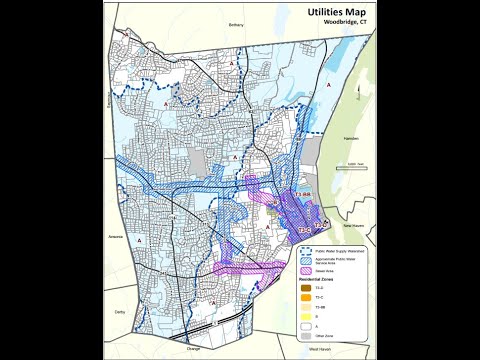
Town-owned sites: Commissioners identified roughly 155 acres of town-owned land — notably the Country Club property, which has sewer and therefore was singled out as a practical near-term site for housing — and discussed issuing a request for expressions of interest (RFEI) or similar solicitations for developers to respond.
Next steps: The commission set work to gather assessor data and to prepare topics and potential invitees for an informational public meeting in September or October, with preparatory discussion at the August meeting and small working groups assigned to specific tasks.
Votes at a glance: The commission approved the June minutes by unanimous voice vote earlier in the meeting and later moved, seconded and approved adjournment when a member needed to leave.
Speakers quoted or referenced in this article are members of the commission identified in the meeting transcript as Chair (S1), First Selectman (S4) and other commission members (S2'S6).