Get Full Government Meeting Transcripts, Videos, & Alerts Forever!
Get email alerts on the Rezoning topic
No spam. Unsubscribe anytime.
Kaysville council denies rezone for 768 West Christopher Circle after neighborhood objections
Summary
The Kaysville City Council voted July 16 to deny a property‑specific rezone that residents said would allow a commercial‑style metal building to alter the character of a cul‑de‑sac. Neighbors pressed for a development agreement or design changes; the applicant told council the structure is a private pickleball court and garage.
Kaysville — The City Council on Thursday voted to deny a request to rezone 768 West Christopher Circle from agricultural‑residential (RA) to R‑1‑20 single‑family residential after residents said the proposed building would undercut neighborhood character.
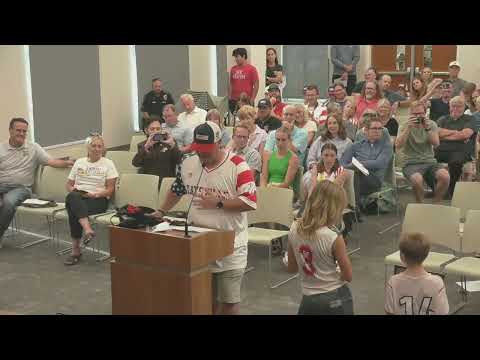
Neighbors who spoke at the meeting said the structure—already under construction—resembled a commercial metal building visible from a public street and argued the council should not amend the zoning map for a single lot. Gary Uresk said he approached the issue “from a very objective point of view” and asked whether a dwelling or rental use might appear in the building; he urged the council to weigh the applicant’s property rights against those of the immediate neighbors. Other speakers raised the city's ordinance that prohibits accessory buildings in side yards abutting a street and said they had not received appropriate public notice when the original permit issued.
The applicant, identified in staff remarks as Nicholas Racker, told the council the structure is a private pickleball court with a small bathroom and mezzanine for gym equipment. He said his plans complied with city approvals and that significant expense—he cited roughly $400,000 to redesign the building with brick or stucco—made facade changes infeasible.
Council members framed the decision as a legislative choice about rezoning, not a permit review. Council member Adams (reading council discussion) said rezoning a single property “changes the nature of that neighborhood” and requires careful due diligence; Council member Jackson said the request looked like a carve‑out that could set an inconsistent precedent. Council member Hunt moved to deny the rezone; the motion was seconded and, after roll call, the motion carried.
Mayor Tran (chairing the meeting) noted the city’s limited authority over private CC&Rs and encouraged neighbors to pursue civil remedies where homeowners’‑association restrictions apply. The council emphasized that building permits and zoning are separate processes: the permit had been issued and construction begun, while the rezone would have changed the legislative map.
No formal development agreement was adopted in connection with this item. The council’s action keeps the property in its current RA zoning; neighbors who urged a design condition or voluntary agreement said they will continue to pursue remedies available under private covenants or future code changes.
What happens next: The denial preserves the existing zoning for 768 West Christopher Circle. Neighbors and the applicant discussed possible outreach and compromise during the meeting, but no new city mandate or design modification was ordered by the council.