Get Full Government Meeting Transcripts, Videos, & Alerts Forever!
Get email alerts on the Zoning topic
No spam. Unsubscribe anytime.
Lancaster County advances zoning change to allow observatories and other passive recreation
Summary
The Lancaster County Board of Commissioners opened and heard a public hearing on text amendment 26007 to expand 'recreational facilities' to include observatories, telescopes and other passive uses; proponents stressed education and outreach and staff said the change creates a path to site-specific special permits.
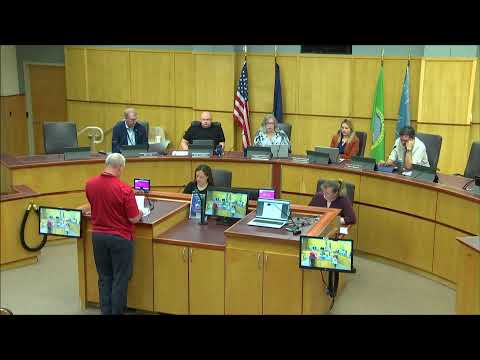
The Lancaster County Board of Commissioners opened a public hearing July 21 on text amendment 26007, which would expand the county zoning definition of "recreational facilities" to include passive activities — such as observatories, telescopes, nature walks and birdwatching — and allow the planning commission to grant area or yard reductions as part of a special-permit process.
Anne Post, an attorney with Rumboldt Luedke (reading the applicant materials), told commissioners the Branch Oak Observatory needs a clear zoning pathway because observatory uses require rural, darker-sky locations and are not explicitly recognized in the current code. "This amendment gives a path to approval," Post said, and she noted the planning commission unanimously recommended the change in June.
Matthew Anderson, cofounder and executive director of the Branch Oak Observatory, described the observatory’s community outreach — monthly star parties, school visits and special events — and said the facility draws participants from across the state and supports STEM experiences for children. "We are unique in the fact there's nobody else in Nebraska doing what we are doing," Anderson said.
Eric Hubbell, the observatory’s interim board president, urged commissioners to visit the site and said the organization stands ready to answer questions at later hearings.
Planning staff clarified that the text amendment is a countywide change that does not approve any single facility; it "sets up the special-permit process" so that future applications can be reviewed case by case for parking, lighting, event size and other site-specific issues, Planning and Development Services' George Weselhoff said. Commissioners noted the public hearing record included one letter they characterized as opposing a potential future special permit rather than the text amendment itself.
If adopted, the text amendment would allow observatory and other passive recreation uses in the Agricultural district by special permit; any zoning relief (for example, setback adjustments) would be reviewed as part of that later special-permit application. The board did not take a final vote on the text amendment at this meeting; the planning commission recommendation and staff comments were entered into the record and commissioners closed the public hearing.