Get Full Government Meeting Transcripts, Videos, & Alerts Forever!
Get email alerts on the Data Centers And Ratepayer Protection topic
No spam. Unsubscribe anytime.
Chairman Brett Guthrie says federal support should help states protect ratepayers as data centers expand
Summary
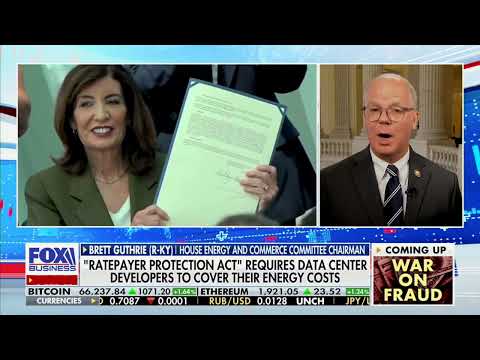
House Energy and Commerce Committee Chairman Brett Guthrie told a program interview that the committee is aiming to direct federal resources to help states adopt "ratepayer protection" plans for electricity costs tied to data centers, arguing moratoriums risk ceding an AI advantage to China.
House Energy and Commerce Committee Chairman Brett Guthrie said federal officials should help states put in place protections for electricity customers as data centers expand, arguing that restrictive statewide moratoriums could let China gain an edge in artificial intelligence development.
"We're competing with China," Guthrie said, adding that "in order to win the AI battle, we have to have access to data in the data centers." He described the committee's approach as directing federal resources to help states implement "ratepayer protection" plans, not imposing a one-size-fits-all federal statute.
Guthrie criticized moratoriums adopted in some states, saying they could slow U.S. progress. "If we had a year moratorium, let's say that's nationwide, and we get behind China, we'll never catch up," he said. He also referenced a New York executive order that imposed a moratorium, noting concerns about already-high energy rates there.
A fellow panelist criticized policies in Democratic-led states that the speaker said reduce investment and jobs, arguing such states "hire these people as their representatives who come out with policies that... hate jobs." The panelist's comment was not identified to a public official in the interview.
Guthrie pointed to a major private investment he said is coming to his district as an example of the economic stakes. He said "one in my district is getting a $19,000,000,000, 20-year investment for Anthropic" and predicted the project will materially raise property values and local school-system wealth per capita.
When the moderator suggested communities could rebate property taxes or other taxes paid by a company such as Anthropic back to residents, Guthrie said local officials are already discussing that option. He said county leaders in the area, including the county executive/judge Roberts, are considering refunds and that the site chosen was a former aluminum smelter with an existing 3% utility tax.
Guthrie framed the committee role as helping states implement protections for ratepayers rather than writing a uniform national law: "So we're not sending a federal statute out. We're assisting states to do so," he said. He added that communities should not bring in data centers that will not "pay their full bill" and urged officials to seek arrangements that ensure local benefits.
The interview did not include any formal committee vote or specific federal bill text; Guthrie described the effort as a federal direction of resources to states and discussed options state and local leaders are weighing. The segment ended with brief closing remarks.