Get Full Government Meeting Transcripts, Videos, & Alerts Forever!
Get email alerts on the Markup Overview topic
No spam. Unsubscribe anytime.
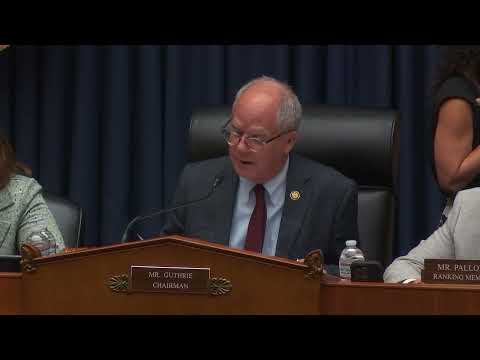
House Energy and Commerce opens markup of 29 bills on grid costs, critical minerals, fentanyl testing and price transparency
Summary
The House Committee on Energy and Commerce opened a markup of 29 bills that would encourage states to charge large electricity users like data centers for grid upgrades, push federal recovery of critical minerals, expand drug scheduling and hospital fentanyl testing under 'Tyler's Law,' tighten oversight of pill presses, and require hospitals and insurers to disclose procedure prices.
The House Committee on Energy and Commerce opened a markup of 29 bills aimed at strengthening the nation’s power grid, reducing costs for consumers, bolstering critical-minerals supply chains, and addressing emerging drug threats.
The committee chair said the agenda includes the Ratepayer Protection Act, which would encourage states to adopt large-load tariffs so data centers help pay for needed grid upgrades rather than shifting those electricity costs to local consumers. "I'm glad we could find bipartisan support for the Ratepayer Protection Act," the chair said, arguing the measure would prevent ratepayers from bearing the added costs of new data-center demand.
The chair also outlined bills to modernize grid infrastructure to ensure reliable access to electricity year-round and noted the committee will consider reauthorizing the federal pipeline safety program that oversees energy delivery infrastructure.
Two bipartisan bills described by the chair would direct the Environmental Protection Agency to coordinate federal efforts to recover critical minerals from discarded and contaminated materials. The chair said the United States is "100% import reliant for 13 critical minerals," and framed recovery and recycling as steps to reduce dependence on foreign suppliers.
Lawmakers also flagged several measures intended to curb the emergence of dangerous synthetic opioids and the illicit production of counterfeit pills. The chair said the markup includes bills to properly schedule xylazine while preserving legitimate medical access, and to enact classwide rescheduling of certain emerging synthetic opioids. The record uses the term "nidazines" in discussing classwide scheduling; the committee described the goal as addressing rapidly evolving synthetic opioids and illicit pill presses.
The chair introduced "Tyler's Law," named for Tyler Shemesh, who died after fentanyl poisoning following a hospital admission in which fentanyl testing was not performed. The chair thanked Tyler’s mother, Julie, for attending and said the legislation would study and seek to improve utilization of fentanyl testing in hospitals to help save lives.
Other bills in the markup would bolster Drug Enforcement Administration authority to oversee a closed distribution system for pill presses and their components to limit illicit production of counterfeit substances.
The chair closed the opening remarks by highlighting a bipartisan measure called the Lower Costs, More Transparency Act, which would require hospitals and insurance companies to publicly disclose actual benefits and procedure prices. The chair framed the bill as a broad effort to improve price transparency in the American health-care system.
The chair urged support for the full slate of bills and yielded five minutes to another member as the committee proceeded with the markup.